

Powell May Stay on Fed Board After May
By Reuters | 16 Jan, 2026
Jerome Powell's term as Fed chair ends in May but a separate seat on the Fed's Board of Governors extends two more years, giving him to option to stay to help check Trump's desire to set monetary policy by fiat.
At 72, U.S. Federal Reserve Chair Jerome Powell has grandkids to play with, a golf game to get back to and a tune or two to master on the guitar.
He also faces a choice: Whether to devote the next years to his family and passions or to battling from inside the Fed to shape if not stymie any Trump administration effort to undermine the independence of the world's most important central bank or radically remake its structure.
Though his term as Fed chief ends in May, with President Donald Trump expected to nominate a replacement soon, Powell's separate seat on the Fed's Board of Governors does not expire for two more years, giving him a potentially critical vote on monetary policy and any broader changes at the central bank until near the end of Trump's presidency.
Like Trump a dealmaker - in Powell's case from his years at the Carlyle Group private equity firm - the Fed chief has no reason to tip his hand.
"I'm focused on my remaining time as chair. I haven't got anything new on that to tell you," Powell said when asked about his plans during a press conference after a December 9-10 policy meeting, a refrain he repeats whenever asked.
But the events of the last few days, with a criminal indictment threatened by the U.S. Department of Justice in what Powell slammed as a "pretext" to pressure him on monetary policy, have made the stakes for the Fed clear, as he indicated late on Sunday in an extraordinary video - now nearing 1.2 million views on YouTube - that snapped years of reluctance to address Trump's relentless pressure campaign head on.
Trump has repeatedly demanded large interest cuts, castigating Powell and the Fed for being too slow to lower borrowing costs.
As an institutionalist and member of what's now regarded as the Republican Party's old guard, a bipartisan figure who has been appointed, promoted, and supported by members of both major parties, including Trump, Powell may see the decision to stay as now nearly unavoidable if he feels the Fed's independence is at risk and believes his continued presence might help defend it.
"Everything escalates with the subpoena," said former Cleveland Fed President Loretta Mester, a career U.S. central bank staffer and now an adjunct professor of finance at the Wharton School of the University of Pennsylvania.
"It does raise the problems that all of the last eight months have brought to the fore, which is that even if the Fed is able to continue to withstand the pressure - and I am sure their policy decisions are being based on economics and financial market developments and not anything the president expresses - the fact that it even raises a question is a cost," she said, as investors and the public adjust to a U.S. central bank that may begin operating under different rules, constraints, and pressures.
POWELL COULD UPEND NEARLY EIGHT-DECADE PRECEDENT
A decision by Powell to stay on as a Fed governor would upend decades of precedent in which outgoing U.S. central bank chiefs clear the way, in the spirit of democratic transition, for their successors and resign their separate seats on the Fed's board. The last to stay on was Marriner Eccles, whose name adorns one of the two buildings under renovation at the Fed that are at the core of the Department of Justice probe and who remained on the board for more than three years after his leadership term expired in January 1948.
The Fed board's seven, staggered, 14-year terms, with one expiring every two years, are meant to limit a president to two appointments in any given term, though in practice more seats often come open through resignations. The naming of a Fed chief, confirmed through a U.S. Senate process separate from board appointments, was always seen as the most consequential pick, and it is not uncommon for board vacancies to linger sometimes for years.
But the events of the last few days already have set the 14-year Fed veteran on a new course, with Powell's video remarks on Sunday by far his most direct rebuttal after years of Trump pressure, and the threatened indictment raising concerns about how far the president and his administration may go to try to gain full control of the central bank - or what they might do to policymakers who resist their future demands.
The current seven board members are otherwise split between Trump appointees and governors appointed by former President Joe Biden. While the blind support of Trump's own appointees is not guaranteed - they also have legal protection from being fired, though that is being tested in the Supreme Court through the president's effort to fire Fed Governor Lisa Cook - more seats will mean more leverage, with Powell a potential swing vote if partisan divides do emerge.
"With a majority of governors there are all sorts of reorganizations and reforms that are in the offing," said Mark Spindel, chief investment officer at Potomac River Capital and co-author of a history of Fed politics. "It is not just lower rates ... The Fed is in cutting mode anyway."
STILL TIME TO DECIDE
Remaining on the Fed board could be taxing and risky, but not much has been normal about Trump's relationship with Powell and the current Fed, with unusually sharp public criticism the norm starting weeks after Powell stepped into the job as Trump's appointee in 2018. It has escalated recently to more pointed threats, the move to fire Cook, and a clear willingness from the president's side to ignore precedent.
In a Reuters interview on Wednesday, Trump said he had no plans to fire Powell, and, with a backlash developing in the Senate to the investigation and Treasury Secretary Scott Bessent reportedly angered over it, "we're (in) a little bit of a holding pattern with him, and we're going to determine what to do."
The Federal Reserve Act says Fed board members can only be removed "for cause," a standard that has not been defined in court because no president before Trump has made the attempt. A definition may be forthcoming in the Cook case, but the term is generally taken to mean some form of malfeasance or abuse, not a dispute over monetary policy. The principle, widely held across countries, is that political control of interest rates is a recipe for runaway inflation given the short-term interests of politicians and the long-term nature of economic cycles.
There are four months still to go before Powell's leadership of the Fed ends, and Trump's nominee to fill the top job will have to clear the Senate, a process complicated by the threats against the current U.S. central bank chief.
That's enough time for Powell, as well as Fed Vice Chair Philip Jefferson, who faces a similar choice when his leadership term ends in September 2027, to wait and see just how high the "costs" seem likely to rise for the U.S. central bank and economy.
There are plenty of Fed critics who feel the central bank could use a refresh across any number of issues.
Powell and the Fed by their own admission were slow to react as inflation rose to what would become generational heights during the COVID-19 pandemic, though there's a dispute among economists about whether smaller rate increases begun sooner would have made that much difference compared with the faster and larger rises in borrowing costs approved once the response to the rising price pressures began.
The issue is how much further any institutional change may go as Trump gets the opportunity to appoint more Fed governors, up to the point of even removing presidents of the Fed's regional banks who fall out of line.
Bessent, in an essay last year, said he favored larger reform at a central bank he accused of "mission creep and institutional bloat," adding that it "must change course."
How far he or a new Fed chief wants to push remains to be seen.
But they may need Powell's support, at least for a time, to make it happen. And, for the current Fed chief, that could mean a delayed retirement.
(Reporting by Howard Schneider;Editing by Dan Burns and Paul Simao)
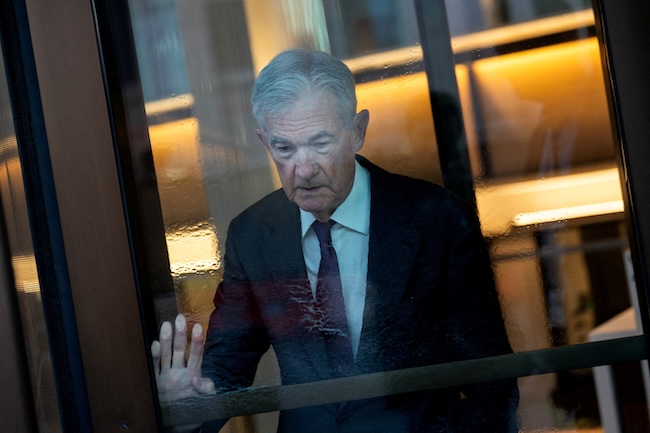
Federal Reserve Chair Jerome Powell pushes the door at the U.S. Federal Reserve in Washington, U.S., January 13, 2026. REUTERS/Nathan Howard
Asian American Success Stories
- The 130 Most Inspiring Asian Americans of All Time
- 12 Most Brilliant Asian Americans
- Greatest Asian American War Heroes
- Asian American Digital Pioneers
- New Asian American Imagemakers
- Asian American Innovators
- The 20 Most Inspiring Asian Sports Stars
- 5 Most Daring Asian Americans
- Surprising Superstars
- TV’s Hottest Asians
- 100 Greatest Asian American Entrepreneurs
- Asian American Wonder Women
- Greatest Asian American Rags-to-Riches Stories
- Notable Asian American Professionals