

Top Chatbots Found to Misrepresent News
By Reuters | 21 Oct, 2025
A study by BBC and EBU showed chatbot misstatements of news in response to about 81% of prompts, with overall accuracy rates ranging between 28% to 75%.
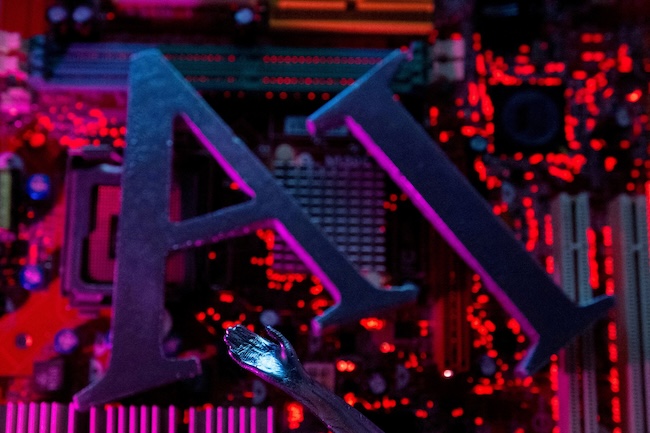
AI (Artificial Intelligence) letters and robot hand are placed on computer motherboard in this illustration created on June 23, 2023. REUTERS/Dado Ruvic/Illustration/File Photo
Leading AI assistants misrepresent news content in nearly half their responses, according to new research published on Wednesday by the European Broadcasting Union (EBU) and the BBC.
The international research studied 3,000 responses to questions about the news from leading artificial intelligence assistants - software applications that use AI to understand natural language commands to complete tasks for a user.
It assessed AI assistants in 14 languages for accuracy, sourcing and ability to distinguish opinion versus fact, including ChatGPT, Copilot, Gemini and Perplexity.
Overall, 45% of the AI responses studied contained at least one significant issue, with 81% having some form of problem, the research showed.
Reuters has made contact with the companies to seek their comment on the findings.
Gemini, Google's AI assistant, has stated previously on its website that it welcomes feedback so that it can continue to improve the platform and make it more helpful to users.
OpenAI and Microsoft have previously said hallucinations - when an AI model generates incorrect or misleading information, often due to factors such as insufficient data - are an issue that they are seeking to resolve.
Perplexity says on its website that one of its "Deep Research" modes has 93.9% accuracy in terms of factuality.
SOURCING ERRORS
A third of AI assistants' responses showed serious sourcing errors such as missing, misleading or incorrect attribution, according to the study.
Some 72% of responses by Gemini, Google's AI assistant, had significant sourcing issues, compared to below 25% for all other assistants, it said.
Issues of accuracy were found in 20% of responses from all AI assistants studied, including outdated information, it said.
Examples cited by the study included Gemini incorrectly stating changes to a law on disposable vapes and ChatGPT reporting Pope Francis as the current Pope several months after his death.
Twenty-two public-service media organisations from 18 countries including France, Germany, Spain, Ukraine, Britain and the United States took part in the study.
With AI assistants increasingly replacing traditional search engines for news, public trust could be undermined, the EBU said.
"When people don’t know what to trust, they end up trusting nothing at all, and that can deter democratic participation," EBU Media Director Jean Philip De Tender said in a statement.
Some 7% of all online news consumers and 15% of those aged under 25 use AI assistants to get their news, according to the Reuters Institute’s Digital News Report 2025.
The new report urged AI companies to be held accountable and to improve how their AI assistants respond to news-related queries.
(Reporting by Olivia Le Poidevin, Editing by Timothy Heritage)
Articles
- Iran-Linked Hackers Access FBI Director's Personal Email, Publish Online
- US Can Confirm Only a Third of Iran's missile Arsenal Destroyed,
- Chinese Ships Balk at Hormuz Despite Safe Passage Assurances from Iran
- SpaceX Listing Stirs Social Media Frenzy, Ticker Bets
- Sony to Hike PlayStation 5 Prices Again on Surge in Memory Chip Costs
- Huawei's AI Chip Earns Credibility with ByteDance, Alibaba Orders
- SoftBank Secures $40 Billion Loan for More OpenAI Investments
- BYD Posts First Annual Profit Decline in Over 4 Years
- Nvidia Is Rare Tech Giant With Founders' Kids in Executive Posts
- Oil Prices Head for Steepest Weekly Fall in 6 Months