

When Childhood Foods Get Tiktokked, I Feel Cheated
By Kelli Luu | 20 Jan, 2026
Why do I feel loss and resentment when viral TikTok videos rebrand Asian comfort foods as innovative new creations?
Today's big cultural wave on TikTok is Western audiences discovering foods Asian communities have been eating forever.
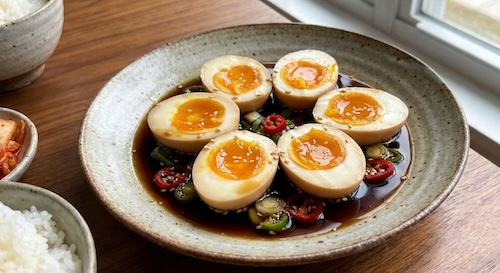
The most recent fiasco on the platform revolved around soy sauce marinated eggs, or Mayak eggs, something many of us grew up eating as an excellent source of protein.

Courtney Cook's viral Mayak Egg recipe video has over 11 million views. (Image credit: @courtneylcook on TikTok)
Families across multiple Asian cultures have their own versions of eggs marinated in soy sauce. It isn't an exotic or specialty food and it certainly isn’t innovative. A soy sauce marinated egg on top of rice is comfort food; it's a part of our culture, but when TikTok creator, Courtney Cook posted herself enjoying Mayak eggs, the dish suddenly became known as “Courtney Cook’s Eggs”.
To be fair Courtney Cook did pay homage to our beloved soy marinated eggs, making it known that she was making a Korean-style recipe and even credited the original. The issue isn't Courtney Cook herself, but her followers who instantly renamed the dish, causing the video to go viral. I watched videos of people trying soy marinated eggs over a bed of rice, something I ate nearly every day as a kid, labeling it as a weird food combination. Her followers began posting themselves trying “Courtney Cook’s Eggs”, giving credit to Courtney as the original creator. This had Asian viewers like me utterly confused, asking why this Asian struggle meal is suddenly trending as “Courtney Cook’s Eggs”.

Korean Mayak Eggs over rice. (Image credit: @sanjcooks on Instagram)
As Courtney’s eggs went viral, I watched multiple people confidently share videos of themselves trying this “new” recipe without mentioning anything about Asian culture. What I found most disturbing was when Asian creators chimed in, pointing out the irony of the situation, fans were quick to shut it down and tell us how “it’s not that big of a deal”, or that “it’s just eggs”.
To the Asian community, these are not “just eggs”. These are foods that kept us connected to our culture, flavors that we hid during lunch because the smell was “too foreign” to be seen as normal. So when people dismiss the community’s concerns, it explains exactly why this scenario is even taking place and why the pattern persists.
The pattern entails erasure. Most trendy Asian foods are only considered trendy because a non-Asian person shared their love for it and the origin story always gets wiped away. This precise pattern happened to matcha when popular influencer Emma Chamberlain positioned the beverage as a healthy and aesthetic coffee alternative in the mid 2010s. Matcha became the new go-to coffee, but Asians have been drinking matcha for centuries. That's where the difference between appreciation and appropriation lies.

Influencer Emma Chamberlain photographed with her own matcha products, promoting the rise of matcha as a mainstream coffee alternative. (Image credit: Chamberlain Coffee)
When people say “it’s not that deep”, they really mean it’s not that deep to them because it's easy to minimize something when you have no connection to the subject. But the truth is, it is that deep. It was that deep when my soy sauce eggs were laughed at whenever I brought them out at school.
Now, I laugh at how Asian food has gone from being mocked to monetized after suddenly being “discovered” by influencers. Dishes that used to get side-eyed in the cafeteria are now trending on TikTok, driving people to the Asian markets and causing price inflation on items like instant ramen and soup dumplings.
This conversation isn’t about gatekeeping Asian foods or saying non-Asians can’t enjoy them. Food is meant to be shared and experienced, but it's important to respect and acknowledge its cultural origins. Without this acknowledgement, it's easy for Asian cultural history to be erased and misappropriated as an influencer's new and original creation.
For us Asian Americans it is frustrating that foods and flavors that existed long before they became TikTok videos achieve acceptance only after being filtered through a Western lens. This conversation is about recognition of cultural history and tradition because they matter to us. Asian food has always been good, so the least we can do is to stop making a mockery of the food we've loved forever.
© 2026 by Asian Media Group Inc.
Recent Articles
- Global Demand Surges for Anti-Drone Technology
- BYD Looks to Formula One for Fast Global Brand Expansion
- Europe's EV Sales Keep Growing As Fuel Costs Rise, Car Prices Fall
- SK Hynix Ships Samples of Next-Generation AI HBM Chips
- Apple to Raise Prices Due to Memory Chip Shortage
- Trump Scraps Four More Offshore Wind Leases with $765 Million Refund
- Oil Roundtrips, AI Booms, US Consumers Spend, Economists' Fed Outlooks Go Wild
- Trump Endorsee Loses in Georgia Governor's Primary Race
- BMW Shares Sink After Profit Warning Highlights China and Iran Risk
- AI Will Lead to Labour Shortages, Bezos Says at Paris Conference