

CultureAsian Holiday Dishes That Carry More Than Flavor
By Kelli Luu | 20 Dec, 2025
Take a look at these five traditional dishes that are filling holiday meals with meaning.
During the holidays, food becomes more symbolic than ever in Asian households and every dish carries meaning, history, and hope going into the new year.
Filipino households are lucky. Many of their traditional dishes are eaten year long, but for the biggest events like Christmas and New Year’s, lechon is their ultimate delicacy. A whole roasted pig sits at the center of the table, representing abundance and generosity.
Alongside the golden pig, you will also find pancit malabon, a noodle dish eaten in celebration of life milestones and of course, during the holiday season. These noodles are not cut. In fact, the longer, the better as they symbolize longevity and good health in the new year.
For Indian families, the New Year is brought in with sweets such as ladoos, barfi, and jalebi. In Indian culture it is believed that no new beginning should start without sweetness, which is why these desserts represent joy and good fortune in the year ahead.
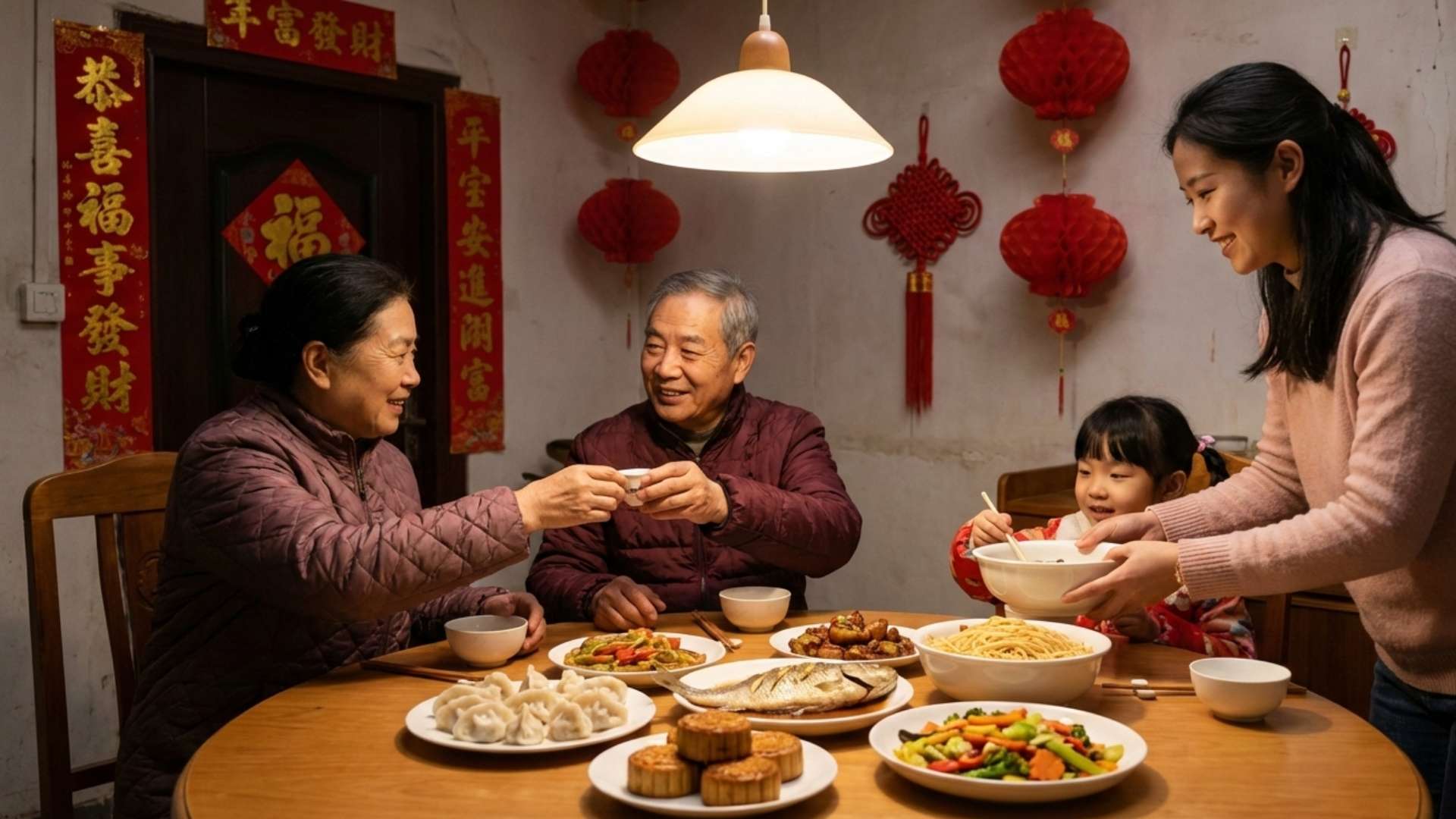
Lunar New Year brings out traditional favorites in Chinese households. Dumplings are always essential during celebrations due to their shape being similar to gold ingots. The more dumplings you eat, the more wealth and good luck will come with you into the new year.
And across the many different cultures that celebrate the Lunar New Year, rice cakes are a common denominator. They’re sticky, tasty, and can be easily shared as they are made to be eaten together to represent unity and the bond between family.
In Asian cultures, holiday dishes hold more meaning than just tradition. They hold wishes for what is to come in the new year and while flavors may differ across family or region, the meaning will always remain the same.
Recent Articles
- ChatGPT App Hits 1 Billion Monthly Active Users in Record Time
- World Cup Could Cost Employers as Workers Tune into Matches
- Vietnam's May Trade Deficit Widens to Record High
- Taiwan, South Korea Stocks Get Goldman Upgrade As Asia Rally Intensifies
- Where'd the Mike Go?
- Californians Pick New Governor, Possibly Tip Balance in Congress
- Microsoft Teases Devices Powered by AI Cloud
- Microsoft Reveals New Quantum Chip Made with AI, Systems by 2029
- Huang Anoints Marvell 'Next Trillion-Dollar Company'
- China Owns More Than 11,000 German-Developed Patents
Asian American Success Stories
- Asian American Polls
- Asian American Parenting
- Personalities
- Identity
- The 130 Most Inspiring Asian Americans of All Time
- 12 Most Brilliant Asian Americans
- Greatest Asian American War Heroes
- Asian American Digital Pioneers
- New Asian American Imagemakers
- Asian American Innovators
- The 20 Most Inspiring Asian Sports Stars
- 5 Most Daring Asian Americans
- Surprising Superstars
- TV’s Hottest Asians
- 100 Greatest Asian American Entrepreneurs