

Gen Z's Deferred Sexuality Evokes Memories
By J. J. Ghosh | 05 Dec, 2025
Children of Asian immigrants may relate to the social distancing and cautionary tales that may have put Gen Z in a sexual holding pattern.
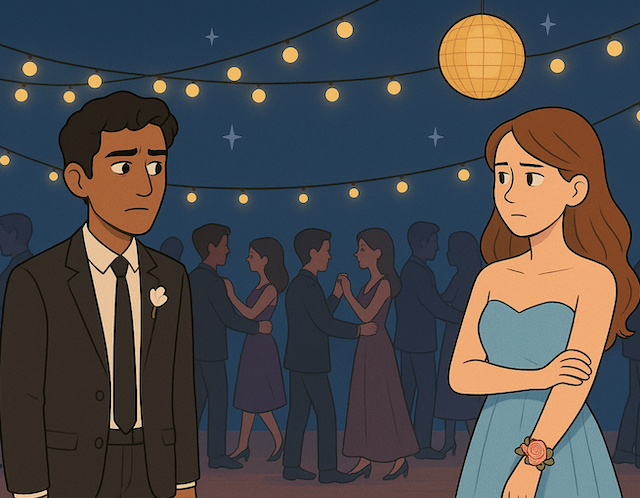
There’s a lot to love about Gen Z.
They’re no-nonsense. They won’t work jobs that they don’t care about. They’re politically engaged, often radically so and on issues that others might find taboo like gun violence and the middle east. And they’re knowledgeable about a variety of topics thanks to the spread of information on TikTok.

The raunchy 200s comedy American Pie captured the youthful desire to lose one's virginity
But, lately, they’ve become associated with a dark truth that threatens to overshadow all of that: They’re not having sex.
Relatively speaking, of course. According to at least one study, 48% of that demographic are still virgins.
Upon hearing this, my first thought was “Of course they aren’t having sex. They’re babies.” As a millenial, I’m still coming to terms with the fact that Gen Alpha are the new kids on the block and many Gen Z-ers have aged into adults in their twenties.
And as the child from a mixed-race household, my feelings on this news are, well, mixed.
The midwesterner in me wants to tell these adult Gen Z-ers to go out there and get laid. My Indian American half, on the other hand, wants to assure them that this journey may take some time.

The arrest of movie mogul Harvey Weinstein helped spur the #MeToo movement
Let’s Talk About Sex
Most Asian American stereotypes haven’t aged well. Western assumptions about arranged marriages and eating our pets are patently false. And I have personally done more than my fair share to disprove the belief that we’re all good at math.
But I do think there remains some truth to the idea that sexual repression remains prevalent not just in the AAPI community but most immigrant households in which sex is a taboo.

Anything sexual remains a taboo topic in many immigrant households
Just this week, podcaster Jasleen Singh joined Flagrant 2 to discuss her own experience with this phenomenon:
“You guys have to understand…I was the repressed Indian girl that didn’t even watch Jersey Shore in high school because I found it to be too inappropriate.”
Even today, Singh notes, she hesitates to engage in public displays of affection with her husband “Because we never saw our parents kissing ever so it’s like so foreign to us.”
Her experience is a common one. And it’s in stark contrast to some of our peers.
I’ll never forget the time that a friend’s dad picked a group of us up from a hangout in the eighth grade.
“So, did anybody get any action tonight?” The White father asked, before going around the Suburban and asking each of us more directly.
Our answers ranged from “flirting” — which, in my case, meant that I probably said “Hi” to a girl before walking away to quote an Adam Sandler movie to one of my male friends — to “spooning” to the man’s own son bragging a a “makeout sesh.”
My second generation mind simply couldn’t comprehend a world in which I would discuss this sort of thing with my own parents.
Maybe, I now find myself wondering, the parents of Gen Z-ers have shifted to a more immigrant approach to sex and away from that of my friend’s White SUV-driving dad.
As it turns out, there are a few factors that explain why this trend may be specific to Gen Z, rather than a more broad permanent shift.
The #MeToo Era
In 2017 thousands of women decided that enough was enough and came forward with harrowing accounts of sexual assault, often at the hands of powerful men.
It arguably started with allegations against a couple Hollywood bigshots in particular, like movie mogul Harvey Weinstein.
Soon the dam had broken and no sex pest was safe, with credible allegations sweeping not just through Hollywood, but taking out New York Governor Andrew Cuomo and nearly bringing down Supreme Court Associate Justice nominee Brett Kavanaugh.
Years later we can still reasonably debate what the long-term impacts of the movement were. In the same way no one would claim that the Black Lives Matter protests in the wake of George Floyd’s killing resulted in the elimination of racism, the Me Too movement certainly did not eradicate sexual harassment.
But maybe, at the very least, more powerful men may now think twice before daring to abuse their privilege.
There may also have been some unintended effects, which is where Gen Z’s own dating patterns come in:
Those coming of age at a time when seemingly non-stop headlines were detailing the ways in which sexual impropriety has ruined countless lives may simply have chosen not to engage in sex at all.
And that seems to be at least a partial explanation for Gen Z’s declining dating and sex rates.
The Pandemic
I think back to American Pie, one of my favorite raunchy coming-of-age comedies. The premise is that four friends make a pact to lose their virginity on prom night.
While I never personally witnessed anything resembling a pact, there is some truth to the idea that high school, particularly junior and senior year, is when young people set their sights on sexual exploration.
For those graduating in 2020, however, there was no prom. Or graduation. Or really any of the fun social events that serve as a rite of passage for high schoolers
Missing many of those experiences has put Gen Z at a disadvantage.
Dating Apps
Earlier this year the CEO of Match Group, which owns the popular dating app Tinder, explained to a group of investors that “This generation of Gen Z, 18 to 28 – it’s not a hookup generation. They don’t drink as much alcohol, they don’t have as much sex.”
In some ways, Tinder may itself be to blame for that trend.
The current crop of 18 to 28 year-olds have not known a world in which apps like Tinder, Bumble, and Hinge were not a core part of the dating scene.
As much as it pains me to drop a “Back in my day…,” it is a matter of fact that many of us millennials only had access to such apps once we had already gleaned some level of familiarity with dating.
In other words, we had to do things the hard way: Mustering up the courage to ask someone out in person. I can’t claim it was ever a fun experience, but I do wonder if missing out on the experience would have made me less socially adept.
Tinder becomes a vicious cycle. Those who are using it to find partners may have little idea how to actually find a partner.
Of course, Gen X is within their rights to mock this “We had to do things the hard way” narrative and remind Millennials that we too were coddled by, say, texting and AOL instant messenger, which I used to ask more girls out than I feel comfortable admitting.
Let’s call it a snowball effect. If my generation was stunted when it comes to social skills, it only got worse for those in the generation that would follow us.
Taboo Topic
I wouldn’t dare claim that children of immigrants inherently have less sex than anyone else. But I do think that sex remains a greater taboo in our community than most others.
And something akin to that reserved attitude might be what’s ultimately at the heart of Gen Z’s declining rate of sexual activity. While each of the above reasons offers a unique explanation, together the effects of the Me Too movement, diminished social interaction from COVID, and more dependence on the dating apps likely amount to less communication on the topic.
As many children of immigrants might say, "Game recognize game."
But Gen Z'ers need not despair. While a variety of factors may have delayed their sexual awakening, many of us stand as living proof that it can still happen.
The real question is, once they do go on to have kids, will they take on sexual reserve akin to immigrant parents or that of my friend's White dad in the Suburban?
© 2025 by Asian Media Group Inc.
The midwesterner in me wants to tell these Gen Z-ers to go out there and get laid. My Indian American half, on the other hand, wants to assure them that this journey may take some time.
Recent Articles
- Samurai Blue Sweep Aside Tunisia, Japan Fans Sweep Monterrey Stadium
- Lebanon Fighting Threatens Switzerland Negotiations
- Danone-Chobani Yoghurt Protein War Underscores GLP-1 Impact
- Italy's Meloni Tells Trump to Focus on His Own Popularity as Row Continues
- Trump Unveils Gifted Qatari 747 As Addition to Air Force One Fleet
- A Warm World Cup Welcome Endears the US to Fans
- China's May Refined Oil Exports Rose from April, Australia Received Agreed Volume
- New Bangladesh Premier to Seek Investments, Jobs in China, Malaysia
- Charles Schwab Working with Cboe to Enter Prediction Market
- Mexico's Love Affair with All Things Korean — Until Thursday's Kickoff