

How America's Germaphobia Contributes to Arthritis, Obesity, Depression, Chronic Fatigue
By Goldsea Staff | 13 Jan, 2026
Your health may improve if you accept that your body was made to thrive in a world filled with germs.
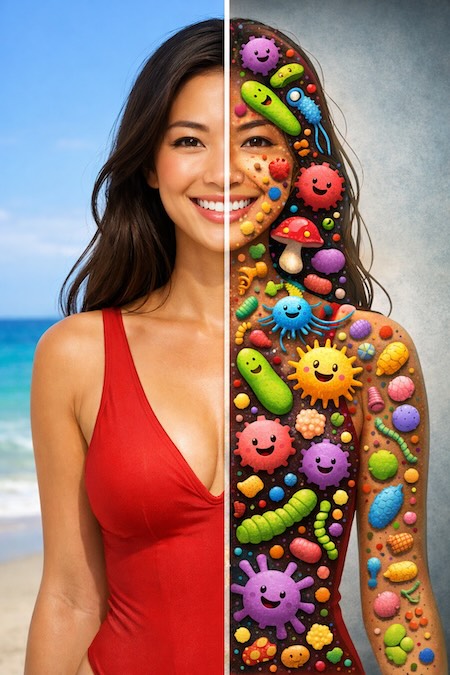
(Image by ChatGPT)
Americans devote far too much of our lives disinfecting kitchens, washing hands dozens of times a day, sterilizing our homes with chemicals, and recoiling from dirt, sweat, animals and even other people as potential sources of contamination.
We've been conditioned from early on to see this obsession with cleanliness as a moral virtue and a public health triumph. Yet a growing body of recent research suggests that germ avoidance may be undermining American health and contributing to rising rates of autoimmune disease, obesity, depression, and chronic fatigue syndrome.
The truth is that in trying to eliminate microbes from our lives, we are depriving our immune systems, metabolisms, and brains the biological inputs they evolved to require.
The human body isn't designed to be a hermetically sealed machine operating in sterility. It is itself a rich and complex ecosystem shaped by millions of years of evolution to live in constant contact with bacteria, fungi, parasites, and viruses. The immune system, in particular, evolved to learn from regular exposure to a diverse array of microbes, distinguishing between harmless organisms, beneficial symbionts, and true threats. When that training ground disappears, the immune system becomes confused, hyperreactive, and prone to attacking the body itself.
This idea, often summarized as the “hygiene hypothesis,” helps explain the dramatic rise in autoimmune and inflammatory diseases in overly sanitized societies. Rheumatoid arthritis, inflammatory bowel disease, lupus, multiple sclerosis, and severe allergies are far more common in wealthy nations than in poorer ones where children grow up exposed to soil, animals, and untreated water. The immune system, lacking normal microbial stimulation, appears more likely to misfire.
Arthritis provides a clear example. In autoimmune forms such as rheumatoid arthritis, the immune system mistakenly attacks the joints, causing chronic inflammation, pain, and eventual joint damage. Research has found that people with less diverse gut microbiomes are more likely to develop inflammatory arthritis. Excessive cleanliness, antibiotic overuse, and low exposure to environmental microbes reduce microbial diversity in the gut. Without a robust microbial ecosystem to help regulate immune responses, inflammatory pathways can spiral out of control, settling into chronic disease.
Obesity, often framed purely as a problem of willpower or calorie imbalance, is also deeply intertwined with microbial exposure. The bacteria living in the human gut play a major role in regulating metabolism, appetite, insulin sensitivity, and fat storage. Studies comparing rural populations with urban Americans consistently show far greater microbial diversity in the guts of people who live close to animals, soil, and unprocessed foods.
In germ-averse societies, children are often raised in near-sterile indoor environments, fed highly processed foods, and frequently given antibiotics for minor illnesses. This combination shapes a gut microbiome that is less diverse and more prone to promoting inflammation and inefficient metabolism. Some gut bacteria are particularly effective at extracting calories from food and signaling fat storage. When microbial balance is disrupted, the body may store more energy as fat while simultaneously driving hunger and cravings.
The result is a population that can gain weight easily even without extreme caloric excess, and that struggles to regulate blood sugar and inflammation. Germaphobia does not directly cause obesity, but it creates biological conditions that make obesity more likely and harder to reverse.
The effects extend beyond the immune system and metabolism into the brain. Depression, anxiety, and mood disorders are increasingly understood as partially inflammatory conditions. The immune system and the nervous system are in constant communication, and the gut microbiome plays a key mediating role. Certain microbes help produce neurotransmitters such as serotonin and dopamine, while others influence stress hormones and inflammatory signaling.
When microbial diversity is reduced, inflammatory molecules known as cytokines are more likely to circulate at low but chronic levels. These molecules can cross into the brain and alter mood, motivation, sleep, and cognitive function. This inflammatory state has been repeatedly linked to depression and fatigue. In other words, a body constantly on immune high alert may also be a mind trapped in low-grade distress.
Chronic fatigue syndrome, also known as myalgic encephalomyelitis, is one of the clearest examples of how immune dysregulation and microbial imbalance can devastate quality of life. Patients experience profound exhaustion, cognitive impairment, unrefreshing sleep, and worsened symptoms after minor exertion. While the condition remains poorly understood, many researchers now believe it involves abnormal immune activation, altered gut bacteria, and persistent inflammatory signaling.
Populations with extremely low exposure to environmental microbes appear more vulnerable to this kind of immune dysfunction. A system designed to respond to real threats may instead become locked in a state of false alarm, draining energy and disrupting normal physiological rhythms.
American germaphobia did not emerge in a vacuum. It is the product of genuine historical trauma. Before modern sanitation, infectious diseases killed millions, especially children. Clean water, sewage systems, vaccines, and basic hygiene practices saved countless lives. But somewhere along the way, reasonable cleanliness slid into pathological avoidance. Dirt became equated with danger. Bacteria became synonymous with disease. Nature itself began to feel hostile.
This mindset is reinforced by marketing. Antibacterial soaps, disinfectant sprays, and sanitizing wipes are sold with imagery that frames microbes as invisible enemies lurking everywhere. Children are discouraged from playing in dirt. Parents panic over minor scrapes. Schools sanitize surfaces constantly. Pets are sometimes treated as contamination risks rather than sources of microbial enrichment.
Ironically, this hyper-clean approach often backfires. Children raised in overly sterile environments are more likely to develop asthma, allergies, and autoimmune conditions. Adults who avoid microbes aggressively may experience more severe immune reactions when exposure inevitably occurs. The immune system, like any complex system, becomes less resilient when deprived of normal stressors.
None of this means abandoning hygiene or embracing reckless exposure to pathogens. Clean water, handwashing after using the bathroom, safe food handling, and vaccines remain essential. The problem is not hygiene itself but the attempt to eliminate all microbial contact from daily life.
Healthier models already exist. Spending time outdoors, gardening, hiking, and allowing children to play in natural environments increases microbial diversity without significant risk. Owning pets, especially dogs, has been linked to lower rates of allergies and stronger immune regulation. Eating a diverse diet rich in fiber and fermented foods supports beneficial gut bacteria. Avoiding unnecessary antibiotics preserves microbial ecosystems that take years to rebuild.
Even small shifts in mindset matter. Dirt is not inherently dangerous. Most bacteria are not enemies. The human body is not meant to exist in a sterile bubble. It is meant to interact continuously with the living world.
America’s epidemics of arthritis, obesity, depression, and chronic fatigue syndrome cannot be explained by germs alone, or by their absence alone. But germaphobia is an underappreciated contributor, quietly shaping immune systems that are inflamed, metabolisms that are dysregulated, and minds that are burdened by low-grade physiological stress.
Relearning how to coexist with microbes may be one of the most important public health challenges of the coming decades. Not by returning to the deadly conditions of the past, but by restoring a balanced relationship with the invisible life that has always been part of what it means to be human.
© 2026 by Asian Media Group Inc.
Recent Articles
- China Becomes Innovation Engine for Top Global Legacy Carmakers
- Big Tech Data Centers Drive Up Power Bills at America's Rust Belt Factories
- AstraZeneca Pays $200 Mil. Upfront to License Chinese COPD Drug
- Korean Chip Stocks Rebound from Overnight US Selloff as Chip Supply Remains Tight
- DeepSeek Developing AI Chip in Possible Setback for Majors
- Eala and Osaka’s Wimbledon Upsets, Sudo Retains Belt, MLB All-Star Watch
- China Gold Reserves Rise Most Since 2023 As Bullion Tumbles
- Italy's Meloni Seeks to Avoid Escalation After Trump Revives Personal Feud
- Canada's May Trade Surplus Surged to 4-Year High on US Exports
- Beijing Mulls Curbing Overseas Access to China's Top AI Models