

Is Your Fast-Track Lifestyle Causing Hair Loss?
By Goldsea Staff | 09 Dec, 2025
The demands of on-the-go careers can provide too much stress and not enough of the nutrients, sleep and regular moderate exercise to keep your body and hair healthy.
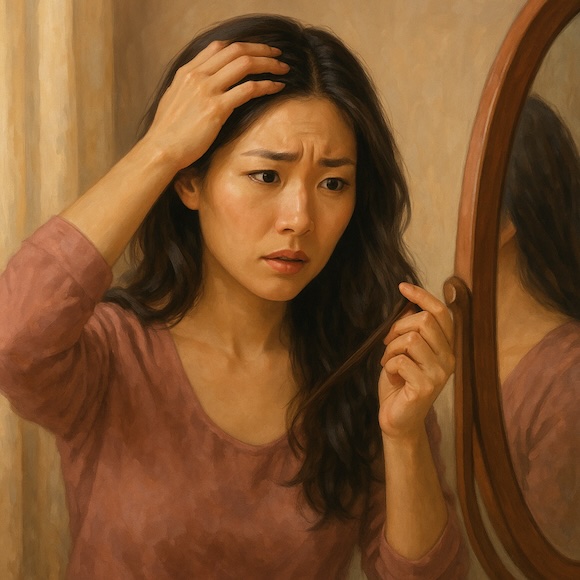
(Image by ChatGPT)
If you’ve noticed more hair swirling down the shower drain, clinging to your brush, or thinning along your part, your first instinct may be to blame genetics, age, or hormones. Those are all valid factors. But for many people living in today’s accelerated world, the true culprit is far more universal: a fast-track lifestyle that chronically pushes the body past the point it can comfortably sustain.
The hair follicle is one of the most sensitive structures in the human body. It responds rapidly to stress, inflammation, nutrient changes, and metabolic strain. When your life resembles a nonstop sprint with few recovery breaks, your hair is often one of the first systems to signal distress.
Stress and Toll of a Fast-Track Lifestyle
The fast-track lifestyle is defined by urgency. You wake early, sleep late, devour quick meals, squeeze in high-intensity workouts, juggle demanding deadlines, scroll endlessly for stimulation, and function in a perpetual state of mental multitasking. Your body, however, evolved for steady rhythms and predictable cycles. When daily life becomes a series of micro-crises, the physiological cost accumulates faster than most people realize. The hair follicle, which requires a delicate and sustained nutrient flow, becomes a casualty of chronic imbalance.
One of the most direct links between a fast-track lifestyle and hair loss is stress. Not just the occasional stressful day, but chronic, low-grade tension that never fully dissipates. High cortisol levels push more hair follicles into the telogen phase—the resting state that precedes shedding. This condition, known as telogen effluvium, often results in sudden, diffuse shedding across the scalp. The frustrating part is that the shedding begins months after the triggering event, which leads many people to overlook lifestyle as the cause. Whether it’s a grueling job, an emotional strain, a major life change, or simply the constant pressure to perform, chronic stress is one of the strongest accelerators of hair thinning.
Short Sleep
But stress doesn’t operate alone. Sleep deprivation is its close partner in undermining hair health. People on the fast track often sacrifice restorative sleep to keep up with obligations or nighttime device use. Yet deep sleep is when the body repairs tissue, regulates hormones, and stabilizes metabolic systems. When your sleep becomes irregular, fragmented, or insufficient, cortisol levels rise while growth hormone declines. The scalp receives poorer circulation. Repair processes slow down. Over weeks and months, these changes add up to weaker, thinner hairs that shed more easily.
Poor Diet on the Run Lacks Nutrients
Diet is another major factor disrupted by fast-paced living. Hair is made mostly of keratin, a protein that requires steady supplies of amino acids, iron, zinc, vitamins B12 and D, and healthy fats. But fast-track lifestyles encourage grab-and-go meals, ultra-processed snacks, skipped breakfasts, and late-night meals chosen out of convenience rather than nourishment.
Even if you’re eating enough calories, you may be missing the nutrients hair relies on. Iron deficiency, for example, remains one of the most common causes of hair thinning in women, especially those who diet aggressively or eat irregularly. Low protein intake can cause hair strands to grow thinner and more fragile. Deficiencies in zinc or B vitamins can impair the hair growth cycle entirely. Modern life makes it stunningly easy to be calorically full yet nutritionally starved.
Rapid Weight Loss
Compounding the nutritional issue is the widespread trend toward extreme dieting, intermittent fasting done without adequate guidance, and weight loss surges driven by appearance pressures or performance goals. Rapid weight loss is a physiological shock. When food intake drops suddenly, the body moves into conservation mode, redirecting nutrients toward vital organs and away from nonessential functions like hair growth. People who shed pounds quickly often see a dramatic increase in shedding two to three months later. This is not a sign of permanent hair loss but a message from the body that it cannot maintain the metabolic demands of both rapid change and healthy hair growth.
Sporadic Intense Workouts
The fast-track lifestyle also often includes intense exercise routines. While regular exercise supports circulation and hormone balance, overtraining has the opposite effect. Excessive, high-intensity workouts elevate cortisol, reduce available energy, and sometimes lead to a condition called relative energy deficiency syndrome. When you burn more calories than you consume, even unknowingly, the hair follicles interpret this as a shortage. The result is weakened hair shafts and increased shedding. People who push themselves through daily intense workouts without adequate rest and nutrition are often surprised to learn that their regimen may be sabotaging their hair.
Chronic Inflammation
Beyond hormones, stress, and nutrition, modern fast-track living fosters chronic inflammation. Processed foods, high sugar intake, long hours of sitting, exposure to pollutants, smoking or vaping, and regular alcohol consumption all feed inflammatory pathways. Inflammation constricts blood vessels, including those that supply the scalp. A reduction in microcirculation starves hair follicles of oxygen and nutrients. Inflammatory compounds also disrupt the cellular balance needed for hair cycling, potentially pushing more follicles prematurely into the shedding phase. Even seemingly benign habits—like excessive caffeine intake or skipping meals—can contribute to spikes and crashes in insulin and cortisol, which further aggravate the scalp environment.
Neglecting the Scalp
The scalp itself often suffers from neglect in busy lifestyles. Many people skip hair washing for long periods, use products with harsh chemicals, or rely heavily on heat styling tools. Sebum, sweat, and environmental pollutants accumulate, feeding the growth of inflammatory microbes that irritate follicles. Others wash too frequently or use overly harsh shampoos that strip natural oils, causing dryness and irritation. A chronically irritated scalp is an unfriendly environment for strong hair growth. Add in hairstyles that pull on the hair—tight ponytails, braids, or extensions—and you introduce traction alopecia, a physical form of hair loss that can become permanent if not addressed.
Hydration
Even hydration affects hair health more than most people expect. When you’re moving fast, you may forget to drink enough water. Chronic dehydration reduces skin elasticity, alters sebum production, and undermines the function of follicular cells. Hair becomes brittle and more prone to breakage, which over time contributes to visible thinning. Though inadequate hydration does not cause baldness, it amplifies every other factor that does.
Blue Light of Tech
Technology also plays a subtle but significant role. Hours spent on digital devices delay sleep, increase stress, and expose you to blue light that disrupts circadian rhythms. Constant mental activity and rapid task switching create a state of “always on” cognitive pressure. Few people realize that this mental overload translates directly into physiological stress, which quietly affects the hair cycle.
Social Pressures
Another underappreciated contributor is social pressure. The fast-track lifestyle is not only about doing more; it’s about being seen doing more. Images of high productivity, idealized bodies, and effortless success circulate through social feeds, creating internal pressure to keep up. That pressure infiltrates daily decisions—skipping meals, pushing workouts, staying up late to finish work, or ignoring fatigue. This continuous self-driven pressure adds another layer of stress that can quietly fuel hair loss, even in people without any medical predisposition.
While genetics determine whether you are prone to androgenetic alopecia—the most common form of patterned hair loss—lifestyle determines how quickly that predisposition manifests. Many people who blame genetics are unknowingly accelerating the process by living in a state of chronic nutritional depletion, hormonal imbalance, sleep disruption, and emotional strain. You can’t change your genes, but you can dramatically alter how they express themselves.
The Good News
The good news is that the hair follicle is resilient and responsive to positive change. Many forms of lifestyle-related hair loss are reversible once the underlying stressors are reduced. Telogen effluvium typically resolves within months once the trigger is addressed. Improving nutrition, restoring regular sleep, moderating exercise intensity, and reducing chronic stress all help hair follicles reenter the growth phase.
A balanced diet with adequate protein, iron, zinc, vitamin D, and omega-3s can significantly improve hair density and strength. Better sleep stabilizes cortisol levels. Scalp care routines maintain a clean, well-circulated environment for growth. Even simple habits like staying hydrated, managing screen time, and incorporating relaxation practices—yoga, meditation, breathing exercises—can help restore balance.
Hair loss may feel alarming, but it is often one of the body’s most helpful alarms. It signals that something in your lifestyle is out of alignment. Rather than viewing shedding as a purely cosmetic issue, it’s worth seeing it as a sign that your body needs more balance, more nourishment, more recovery, and more care. Slowing down, even slightly, can have a measurable impact not only on your appearance but on your overall health and well-being.
In a world that rewards nonstop motion, choosing rest and nourishment is a radical act of self-preservation. Your hair is simply telling you what your body already knows: even the most driven lifestyle must make room for recovery. By recognizing the ways your fast-track habits impact your hair, you can take meaningful steps toward restoring vitality from the inside out.
© 2025 by Asian Media Group Inc.
Recent Articles
- China Becomes Innovation Engine for Top Global Legacy Carmakers
- Big Tech Data Centers Drive Up Power Bills at America's Rust Belt Factories
- AstraZeneca Pays $200 Mil. Upfront to License Chinese COPD Drug
- Korean Chip Stocks Rebound from Overnight US Selloff as Chip Supply Remains Tight
- DeepSeek Developing AI Chip in Possible Setback for Majors
- Eala and Osaka’s Wimbledon Upsets, Sudo Retains Belt, MLB All-Star Watch
- China Gold Reserves Rise Most Since 2023 As Bullion Tumbles
- Italy's Meloni Seeks to Avoid Escalation After Trump Revives Personal Feud
- Canada's May Trade Surplus Surged to 4-Year High on US Exports
- Beijing Mulls Curbing Overseas Access to China's Top AI Models