

MediaJapan Offers $10 Billion Oil Support for Asian Neighbors
By Reuters | 15 Apr, 2026
Japan's offer of aid to support oil supplies for neighbors is calculated to prevent crucial supply chains from unraveling due to pressures from the Mideast conflict.
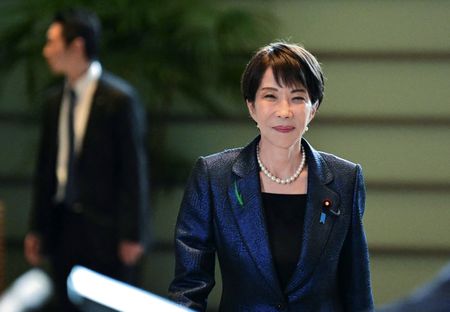
Japan's Prime Minister Sanae Takaichi arrives to a press conference at the Prime Minister's Office in Tokyo, Japan, April 15 2026. PHILIP FONG/Pool via REUTERS
Japan said on Wednesday it would establish a financial framework worth about $10 billion to help Asian countries procure energy resources and bolster their stockpiles as Middle East tensions drive prices higher and disrupt supply chains.
The support, aimed at preventing knock-on effects on Japan's own supply chains, would be channelled mainly through state-backed financial institutions such as Japan Bank for International Cooperation (JBIC) and Nippon Export and Investment Insurance (NEXI).
Announcing the plan, Prime Minister Sanae Takaichi said the support would be equivalent to as much as 1.2 billion barrels of oil, or about one year's worth of crude oil imports by the Association of Southeast Asian Nations (ASEAN). She was speaking after a meeting of the "AZEC Plus" under the Japan-led initiative, Asia Zero-Emission Community (AZEC).
Leaders of the Philippines, Malaysia, Singapore, Thailand and Vietnam attended the meeting, among others.
"We are closely interconnected with Asian countries through supply chains and other channels, and we are mutually dependent,” Takaichi told reporters after the talks, citing examples such as dialysis equipment and surgical drains.
"Supporting Asian countries' supply chains would in turn bolster Japan’s own economy."
The plan includes credit provision for local companies to procure alternative resources such as U.S. crude oil, as well as financing and loans for companies and governments that are part of Japan's supply chain.
Support to help diversify energy sources and boost partner countries' stockpiles through storage tank construction is also included.
Compared with Japan, Southeast Asian countries hold smaller oil stockpiles, leaving supplies of crude and petroleum products such as naphtha – a key feedstock for plastics – increasingly tight. A disruption in Southeast Asian production has fuelled anxiety among Japanese healthcare providers that rely on Asia for critical supplies such as containers, tubes and gloves.
About 90% of crude oil passing through the Strait of Hormuz is destined for Asia, according to Japan's Agency for Natural Resources and Energy.
Tokyo has said it has secured some four months' worth of naphtha for domestic use, but a growing number of manufacturers have flagged a disruption to deliveries in recent days. The government also said on Wednesday it plans to release another 36 million barrels from its national oil reserves from early May.
Asked whether countries had requested access to Japan's oil reserves following the AZEC Plus meeting, Takaichi declined to comment but stressed the agreement did not involve a release of its stockpile and would not affect domestic supply.
(Reporting by Makiko Yamazaki and Chang-Ran Kim, additional reporting by Tamiyuki Kihara; Editing by Kim Coghill)
Recent Articles
- The 4th Time May Be a Charm for the 'New' Keiko Fujimori
- Global Smartphone Market Faces Record Annual Decline as Chip Crunch Worsens
- Tata Taps Chery Technology for Avinya Premium EV Push
- Imminent Strong El Nino Impact Likely Worsened by Climate Change
- DeepSeek Slated to Raise $7 Billion in Maiden Funding Round
- ChatGPT App Hits 1 Billion Monthly Active Users in Record Time
- World Cup Could Cost Employers as Workers Tune into Matches
- Vietnam's May Trade Deficit Widens to Record High
- Taiwan, South Korea Stocks Get Goldman Upgrade As Asia Rally Intensifies
- Where'd the Mike Go?