

Resynchronizing Implant Better at Preventing Heart Attacks
By wchung | 08 Jul, 2026
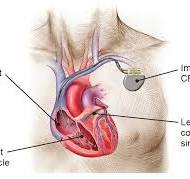
Boston Scientific said Tuesday a clinical study shows its heart resynchronization implant devices were better at preventing death or surgery due to heart failure than another popular type of device.
The Natick, Mass., company said patients implanted with the devices, which recoordinate the action of the right and left ventricles, were 29 percent less likely to die or need surgery than patients who had implantable cardioverter defibrillators.
ICDs are designed to restore a normal heart rhythm by delivering an electric shock.
Boston Scientific said the results show that early implantation of a cardiac resynchronization device can slow the progression of heart failure. The MADIT-CRT trial included more than 1,800 patients with class I or II heart failure, the two mildest types according to a New York Heart Association scale.
The company said about 70 percent of all U.S. heart failure patients have the class I or class II type. It estimated that 5.5 million people in the U.S. have heart failure.
In premarket trading, shares of Boston Scientific advanced 74 cents, or 8 percent, to $9.98.
6/23/2009 9:09 AM NEW YORK (AP)
© 2026 by Asian Media Group Inc.
Recent Articles
- China Becomes Innovation Engine for Top Global Legacy Carmakers
- Big Tech Data Centers Drive Up Power Bills at America's Rust Belt Factories
- AstraZeneca Pays $200 Mil. Upfront to License Chinese COPD Drug
- Korean Chip Stocks Rebound from Overnight US Selloff as Chip Supply Remains Tight
- DeepSeek Developing AI Chip in Possible Setback for Majors
- Eala and Osaka’s Wimbledon Upsets, Sudo Retains Belt, MLB All-Star Watch
- China Gold Reserves Rise Most Since 2023 As Bullion Tumbles
- Italy's Meloni Seeks to Avoid Escalation After Trump Revives Personal Feud
- Canada's May Trade Surplus Surged to 4-Year High on US Exports
- Beijing Mulls Curbing Overseas Access to China's Top AI Models