
How Small European Nations Produce World Cup Giants
By James Moreau | 05 Jul, 2026
Small European nations at the World Cup are proving that a sophisticated development infrastructure can overcome the disadvantage of a limited population size on the global soccer stage.
© 2026 by Asian Media Group Inc.
As the World Cup intensifies, it is striking to note that nine of the teams remaining in the Round of 32 are European nations with populations of less than 20 million people. Switzerland, a nation with a population comparable to the Chicago metropolitan area, serves as a prime example, having now reached the knockout stage in five of the last six World Cup tournaments.
The history of the sport provides some context for this overachievement. While FIFA recognizes that the earliest form of the game, known as cuju, was practiced in ancient China, the modern iteration of soccer was codified in England during the 19th century. This English framework established the professional structures that these European nations have refined over generations. In these countries, soccer is the primary cultural touchstone, whereas in the United States, athletic talent is fractured across football, basketball, and baseball, and in countries like India or Japan, the sporting landscape is dominated by cricket or baseball, respectively. Because soccer is the undisputed focus of European nations, academies are meticulously cultivated to produce a higher concentration of elite talent.
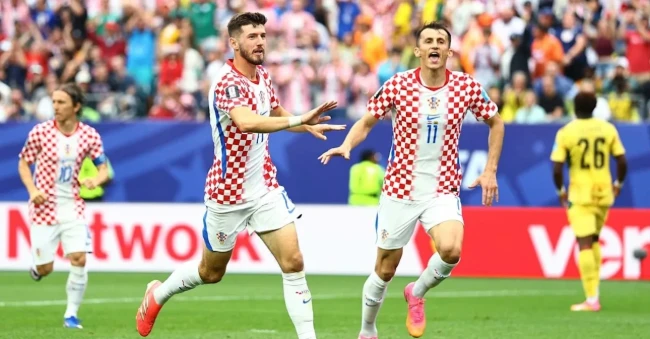
These nations treat soccer as a precision-engineered industry. They implement rigorous sports science – such as GPS-based load monitoring, predictive growth analytics to prevent injury, and data-driven periodization – within professional club academies that operate independently of the school system. For example, Belgium utilized its “Golden Generation” blueprint to overhaul its entire youth system, partnering with universities to mandate uniform tactical philosophies and integrating “Topsport schools” that double a student’s professional contact time. Furthermore, the dual-nationality advantage allows federations to recruit players from the diaspora whose ancestral heritage traces back to their borders. This has been instrumental for teams like Croatia, which has utilized these connections to build a formidable squad despite a population of roughly 3.8 million – comparable to the Greater Minneapolis area. The results of these strategies are undeniable. In the 2018 World Cup, Belgium – whose population is roughly the size of the Los Angeles metro area – claimed 3rd place, while Croatia secured a runner-up finish.
However, the influence of the diaspora works both ways: while European federations recruit players based on ancestral heritage to bolster their own squads, their academy systems also refine stars who eventually choose to represent their nations of origin. For example, Spanish-raised Achraf Hakimi was developed in Real Madrid’s system before becoming the captain for Morocco, and English-raised Antonee Robinson grew up in Liverpool’s youth setup before committing to the United States.
Even as the global soccer ecosystem matures, these exhaustive development systems remain the gold standard in the sport. By prioritizing technical development and capitalizing on deep-rooted cultural passion, they have transformed their small footprints into exceptional performances on a global stage, demonstrating that excellence is defined by the efficiency of one’s infrastructure rather than population size.
Recent Articles
- Airbus Sets Sights on 900 Deliveries for 2026 After Strong June
- Microsoft Joins AI-Driven Tech Layoff Wave with 4,800 Job Cuts
- Iran: 'No Diamond for Lollypop' Response to US Peace Offer to Reopen Strait
- Nazar Khan's TeraWulf Jumps on $19 Billion Data Center Lease Deal with Anthropic
- Hock Tan Extends Supply Deal with Apple Through 2031
- US Service Sector Growth Dipped in June, Employment Rebounds
- Iran Exploring Oil Sales to Japan, Requiring Sanctions Waiver Extension
- Samsung Likely to Post 18-Fold Jump in Profit on Surging AI Demand for Memory
- Sloop Forced Out of New York Ship Parade for Sporting Environmental Slogan
- Trump Sparks World Cup Storm as FIFA Clears Balogun to Face Belgium