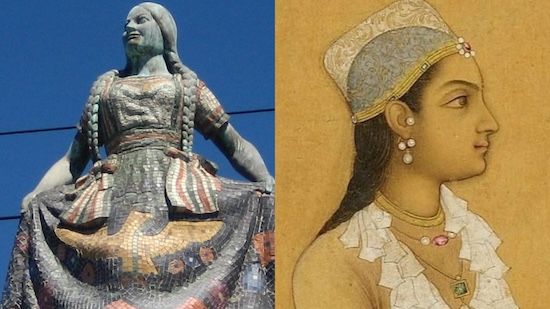

The Asian Origins Behind Mexico’s China Poblana
By Kelli Luu | 29 May, 2026
One of Mexico’s most recognizable outfits traces back to an Asian woman transported across the Pacific.
© 2026 by Asian Media Group Inc.
Did you know the China Poblana actually has deep connections to Asia? Its history represents centuries of cultural exchange between Mexico and the Pacific world.
Its story begins around 1607 with Caterina de San Juan, originally named Mirra, who was believed to be born in India during the Mughal era. When she was a child, Caterina was captured by Portuguese slave traders and transported through Manila in the Philippines.
During this time, the Philippines and Mexico were controlled by Spain through the Manila Galleon trade route, which connected Asia and Latin America for centuries. Ships would transport silk, porcelain, textiles, and sometimes people. The term “China” was a word commonly used for the women of Asian descent who were caught in these trade routes.
After being transported through the Philippines, Caterina arrived in Puebla, Mexico and was purchased by a merchant before later converting to Catholicism and gaining her freedom when her master died. Because of her religious devotion, she began to become well known throughout the city and earned herself the nickname “La China Poblana”.
Asian textiles and fashion influences from China, India, and the Philippines began blending with Indigenous Mexican and Spanish colonial clothing, which later inspired the embroidered blouses, skirts, and beadwork that would define the China Poblana dress.
In the 1800s, the dress became associated with working class women in Puebla and was viewed as a national symbol. Unlike elite European fashion at the time, China Poblana dresses were vibrant and expressive, allowing the women who wear them to stand out as confident figures in Mexican culture. To this day, the China Poblana is still one of Mexico’s most iconic traditional outfits, quietly carrying a history shaped by Asian migration and cultural exchange across the Pacific Ocean.
Recent Articles
- Modi Calls for Foolproof Exam System in India After Youth Protests
- US Looks to Speed Air Taxis, Supersonic Planes to Market
- Tesla Cash Burn to Test Investor Faith in AI Bets
- Charles Schwab Posts Record Quarterly Profit on Trading Boom
- Hasbro Raises Annual Forecasts on Digital Gaming Demand
- US Auto Industry Races to Purge Chinese Connected-Car Hardware Amid Federal Push
- Both Sides Express Interest in Peace Talks As They Continue Flinging Ordinance
- TSMC to Raise Chipmaking Prices by up to 10% in 2027, Nikkei Asia Reports
- GM Boosts Profit Outlook on 'Resilient' Consumer Demand
- Novo Nordisk Sues Eli Lilly, Alleging False Advertising
Other Asian Media Group Sites