

The International Talent Adding Pop to the K-Pop Industry
By Wes Yamanoha | 02 Jul, 2026
K-pop has become a truly global industry drawing foreign stars, both on and off stage, from the US, Japan, Sweden, Australia, Thailand, China, Taiwan among other nations.
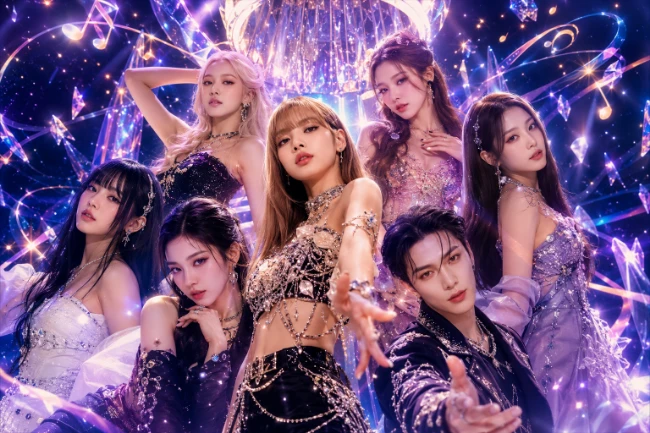
K-pop was never as purely Korean as the name suggested. From the beginning, it borrowed eagerly from American R&B, hip-hop, Japanese idol pop, European dance music, reggae, Latin rhythms, club music and Broadway-style staging. What’s changed is that the borrowing is no longer only sonic. The people making K-pop are increasingly international too.
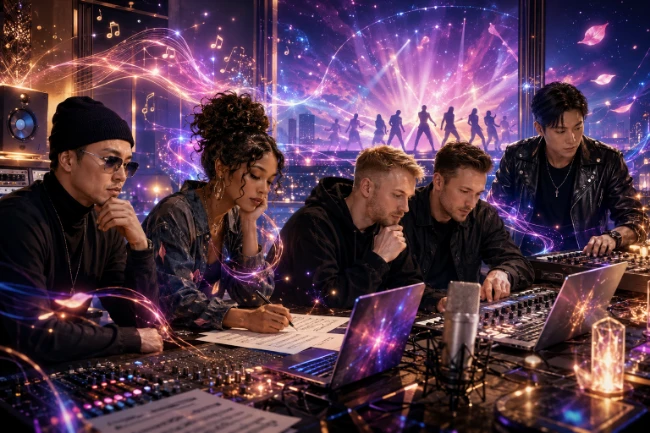
That global talent now shapes the industry in two obvious ways. The first is visible: foreign-born and foreign-national idols are no longer novelty additions, language helpers or market-entry tools. They’re often the face, voice, dance engine or emotional center of the group. The second is less visible but just as important: many of the hooks, beats, English phrases and production turns that make K-pop sound so globally nimble are created by songwriters and producers from the US, Britain, Sweden, Thailand, China, Japan, Australia and beyond.
The result is a genre that’s still unmistakably Korean in its training systems, visual ambition, choreography standards and label architecture, but increasingly global in accent, texture and imagination. Korea has become not just a pop exporter, but a pop-making hub — a place where young performers and veteran hitmakers from many countries can plug into a uniquely demanding entertainment machine.
Lisa of BLACKPINK is the clearest symbol of that evolution. Born in Thailand, trained in Korea and marketed to the world, Lisa helped turn the “foreign member” into something much larger than a translation bridge. She’s a rapper, dancer, fashion figure and solo star whose appeal runs from Bangkok to Seoul to Los Angeles. What she brought to BLACKPINK wasn’t just Thai representation. It was a kinetic cool — sharper dance lines, playful swagger and a global street-pop sensibility that helped make the group feel less like a Korean export and more like a multinational pop event.
Rosé, also of BLACKPINK, represents a different kind of internationalism. Born in New Zealand and raised in Australia, she brought an English-speaking singer-songwriter sensibility into one of K-pop’s most image-conscious groups. Her voice, with its slightly aching, indie-pop edge, gave BLACKPINK an emotional counterweight to the group’s harder rap and club elements. As a soloist, she’s pushed even further toward global pop, showing how a K-pop idol can move between Seoul’s disciplined idol system and the looser confessional language of Western radio.
TWICE’s international lineup helped normalize the idea that a K-pop group could be powered by a mix of Korean, Japanese and Taiwanese personalities. Momo, Sana and Mina, all from Japan, became central to the group’s identity. Momo gave TWICE one of its strongest dance signatures, combining athletic precision with a naturally playful stage presence. Sana became a master of charm, the kind of performer who can turn a small gesture into a viral moment. Mina brought poise, softness and a balletic elegance that helped TWICE mature beyond its early candy-pop image. Tzuyu, from Taiwan, added a calm visual presence and helped signal that K-pop’s appeal in the Chinese-speaking world didn’t have to depend only on Korean stars.
LE SSERAFIM built international talent into its very concept. Sakura arrived from Japan with years of idol experience and a preexisting fanbase, giving the rookie group an unusual mix of polish and vulnerability. She understood cameras, fandom and pressure before the group even debuted. Kazuha, also from Japan, came from a ballet background rather than a conventional idol path, and that difference shows. Her movement has a long, lifted quality that can make even hard choreography look sculptural. Together, they give LE SSERAFIM some of its special tension: part athletic girl-crush group, part fashion editorial, part dance company.
Yuqi of i-dle, long styled as (G)I-DLE, shows how a foreign member can become a musical color all her own. Born in Beijing, she has one of the most recognizable low voices among fourth-generation female idols. That matters because K-pop groups often differentiate members by tone as much as by role. Yuqi’s voice adds warmth, humor and grounded confidence to a group known for strong concepts and self-aware theatricality. She also helps the group feel less like a closed Korean unit and more like a multilingual creative crew.
Ningning of aespa adds another example of Chinese talent becoming indispensable inside a Korean group. As aespa’s powerhouse vocalist, she helps anchor a group whose concept can sometimes feel deliberately artificial: avatars, digital worlds, metallic beats and futuristic mythology. Ningning gives that machinery human force. Her vocals cut through dense production and keep aespa from becoming only a visual or conceptual project. In a group built around the future, she provides old-fashioned vocal firepower.
Ten of NCT and WayV shows how international male idols have expanded K-pop’s performance vocabulary. Born in Thailand, Ten is one of the industry’s most fluid dancers, moving easily between sharp idol choreography, contemporary lines and sleek solo-stage sensuality. His career also shows how porous the borders have become between K-pop, C-pop, Thai fandom and global performance culture. He’s not simply a Thai idol working in Korea. He’s a transnational performer whose career has moved across NCT units, Chinese-language promotion and solo artistry.
Ni-ki of ENHYPEN represents a younger version of that same pattern. From Japan, he came into the industry as a dance prodigy and became a key part of ENHYPEN’s performance identity. K-pop has always prized synchronization, but Ni-ki’s appeal lies in the way he can stand out without breaking the group picture. He brings the intensity of someone who grew up studying stages as much as songs. For a boy group built around dark concepts, vampiric imagery and athletic touring, that kind of movement intelligence is a major creative asset.
Hanni of NewJeans brought a Vietnamese-Australian presence into one of the most influential girl groups of the 2020s. Her appeal is subtler than the thunderbolt charisma associated with Lisa or the vocal punch of Ningning. Hanni’s power is in ease: a natural, conversational, girl-next-door quality that fit NewJeans’ stripped-down Y2K concept. Her background also matters culturally. She widened the image of who could belong in a top-tier K-pop group, not as a guest but as a defining part of its sound and aura.
Zhang Hao, the Chinese singer who rose through Boys Planet and became a central figure in ZEROBASEONE, marked another shift. Survival shows had long attracted international contestants, but his victory showed that Korean viewers and global fans could rally behind a foreign center. His musicianship, including violin training, helped distinguish him from contestants who depended mostly on idol polish. Zhang Hao’s rise suggested that K-pop’s next generation won’t just accept international members; it may put them at the symbolic center of major projects.
The offstage side is just as important. Teddy Park, the Korean American producer and creative figure behind much of YG’s modern sound, has been one of the key architects of BLACKPINK’s impact. Teddy’s music fused hip-hop weight, sparse hooks, chantable slogans and club-friendly drops into a formula that traveled exceptionally well. His work shows that “international talent” doesn’t always mean someone visibly foreign on stage. Sometimes it’s a bicultural producer who understands how Korean idol music, American rap, electronic pop and global branding can be welded into one instantly recognizable package.
Bekuh Boom, an American songwriter and producer, helped write some of BLACKPINK’s most explosive tracks, including songs that leaned into the group’s brash, bilingual, attitude-heavy style. Her work points to one reason K-pop travels so smoothly: many songs are built with international hooks from the start. English phrases aren’t simply added later for export. They’re often part of the song’s architecture, designed to give fans around the world a handle they can shout, meme, remix and remember.
LDN Noise, the British production duo of Greg Bonnick and Hayden Chapman, helped shape the polished electronic side of K-pop, especially through work associated with SM Entertainment acts. Their importance lies in how they brought UK club, house and dance-pop instincts into a Korean system obsessed with detail. K-pop doesn’t usually take a foreign demo and leave it untouched. It absorbs, edits, revoices and restages it. Producers like LDN Noise supply some of the musical DNA, then Korean labels transform it into a total performance product.
Swedish writers have been especially important to K-pop’s melodic brightness. Cazzi Opeia, often working within the Swedish songwriting ecosystem, has written for major K-pop acts and helped bring that Scandinavian gift for clean hooks, unexpected chord turns and glittering choruses into the industry. Sweden has long been a secret engine of global pop, from ABBA to Max Martin. In K-pop, that sensibility meets Korea’s taste for maximal staging and emotional overdrive.
The rise of international songwriting camps has formalized all of this. K-pop companies now routinely gather writers, producers and topliners from different countries to generate songs quickly, competitively and collaboratively. A beat might come from Europe, a melody from an American topliner, a Korean lyric rewrite from Seoul, an English catchphrase from another team and choreography from a separate global network of dancers. By the time fans see the finished video, the song already contains a map of the modern pop world.
This doesn’t make K-pop less Korean. In some ways, it makes Korea’s role even more important. The Korean industry’s special power is its ability to organize chaos: to take global sounds, foreign trainees, multilingual lyrics, fashion-house styling, TikTok-ready gestures and brutal practice schedules and turn them into a coherent group identity. The creative energy comes from everywhere, but the system that concentrates it is still Korean.
That’s why international talent has become so valuable. Foreign idols give groups new faces, accents, movement styles and fan bridges. Foreign songwriters and producers give songs new rhythmic instincts and melodic shortcuts into global ears. Together, they help K-pop avoid becoming a closed formula. They keep it restless.
The next stage is already visible. K-pop companies aren’t just adding foreign members to Korean groups. They’re building global groups trained through K-pop methods, pushing English-language releases, auditioning worldwide and treating Seoul as one node in a wider pop network. The industry’s future may not be “Korean pop conquers the world” so much as “the world comes to Korea to learn how pop can be engineered, performed and sold.”
That may be the real genius of K-pop’s global turn. It hasn’t abandoned its Korean core. I t has turned that core into a magnet. And as Lisa, Rosé, Momo, Sana, Mina, Tzuyu, Sakura, Kazuha, Yuqi, Ningning, Ten, Ni-ki, Hanni, Zhang Hao, Teddy Park, Bekuh Boom, LDN Noise and Cazzi Opeia show, the people drawn to that magnet are giving K-pop new voices, new bodies, new hooks and new reasons to keep evolving.
© 2026 by Asian Media Group Inc.
Recent Articles
- US-EU Trade Hits Record High Despite Tariff Tensions, Study Shows
- Chinese Independent Refiners Snap up Discounted Mideast Oil as Supplies Rise
- US Oil Companies See Big Profit Jump, Faces Pressure to Cut Pump Prices
- Drug Gangs Use Social Media to Recruit Thai Air Crew as Couriers
- Ghonhee Lee's Katalyst Launches Orbital Rescue Mission for NASA Satellite
- Zuckerberg Says Meta AI Agent Tech Progressing Slower Than Expected
- Japan's Services Activity Returned to Growth in June
- Air Force to Investigate Officer Who Called for Trump Impeachment
- How Americans Plan to Celebrate July 4th 250
- Tesla's China-Made EV Sales Jumped 24.4% on Year in June