

Tiger Moms and Beta Moms Contend with Immigrant Demands
By J. J. Ghosh | 23 May, 2026
The New York Times announced that Tiger Moms are dead without considering the realities for the Asian parents who gave birth to the term.
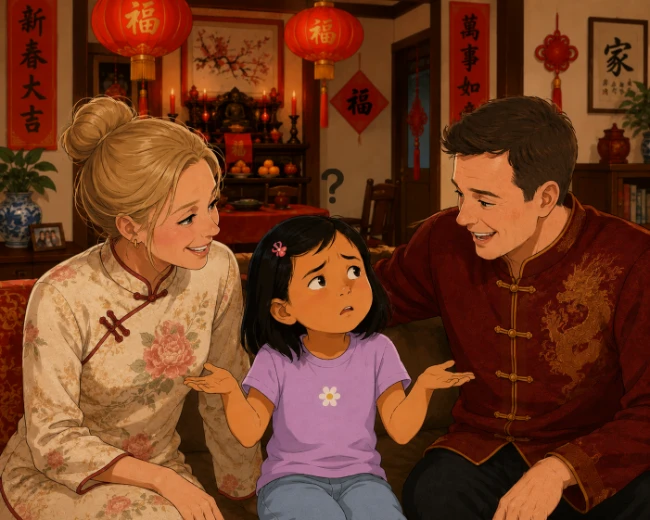
When I saw the Wall Street Journal’s recent headline “The Era of the Tiger Mom Is Over. Enter the Beta Mom,” I was legitimately excited to dive into the article.
As an Asian American, the words “tiger mom” catch my attention the same way that “garam masala” or “med school” might.
It was, after all, Yale Law School Professor Amy Chua’s 2011 memoir Battle Hymn of the Tiger Mother that popularized the term. While Chua is herself Chinese American and not Indian American like myself, her story resonated with members of the diaspora from all over Asia and beyond.
The Wall Street Journal article fails to mention Asian Americans
“Has Chua changed her ways?” I wondered as I made my way past the Wall Street Journal’s paywall. Or perhaps it was less about her specifically and more about our community broadly.
As it turns out, it was neither.
I read the entire article, and then, certain that I had missed something, I read it once more.
Aside from crediting Chua once, there was literally zero mention of the Asian American community. The supposed “Tiger Moms” who had changed their ways? White TikTok parents.
Maybe it shouldn’t have bothered me so much. But here’s why it did.
The Term's Origins
Let me start by going a little deeper into what Chua actually meant when she wrote about tiger parenting — because the term doesn’t simply describe any strict parent.
“Tiger Mom” described Chua’s approach to raising her daughters with the demanding discipline she associated with Chinese parenting traditions. The book became a cultural flashpoint precisely because it articulated something that Asian American families had been navigating for generations: the tension between immigrant striving and American ideas about childhood, between high expectations and warmth, between producing excellence and producing happiness.
Yale Law School Professor Amy Chua authored "Battle Hymn of the Tiger Mom"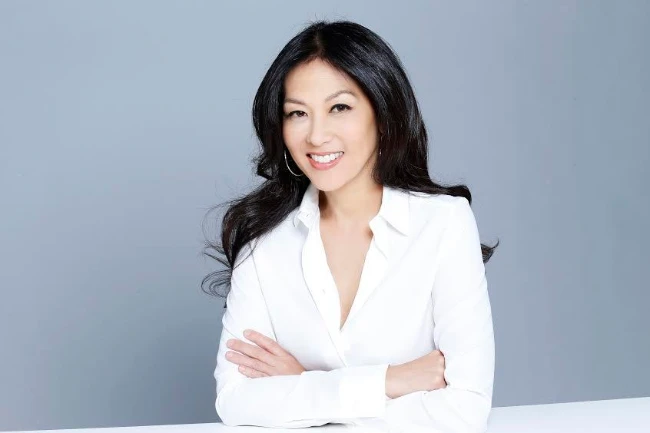
The Tiger Mom archetype, in other words, is specifically and deliberately Asian. It was coined by an Asian woman about Asian parenting culture. It entered the American cultural lexicon as a shorthand for the particular pressure that AAPI families place on academic and professional achievement.
And I think this part is worth clarifying: I don’t necessarily think that tiger parenting is a good thing.
One can legitimately argue that in some cases it veers dangerously close to abuse if not crossing the line altogether. Plenty of Asian Americans I know have recounted — with an almost disturbing nonchalance — how commonplace childhood beatings by their parents were.
And yet while not every Asian American I know grew up under a tiger parent, none of them deny that the practice exists. It’s part of our cultural vocabulary. It’s something we discuss, debate, laugh about uncomfortably at family dinners, and occasionally unpack in therapy.
Which is what this article very much seems unable to do — because it never once talked to any of us.
What the Piece Actually Tells Us
The Journal describes Beta Moms as women who have grown exhausted by the competitive parenting culture of the past two decades and are choosing to opt out — allowing their homes to be messy, their children to do their own homework, and their schedules to be less structured.
This is framed as a revolutionary rejection of the Tiger Mom ideal.
But some would argue that what these women are describing — letting kids be kids, not hovering, allowing mistakes, not treating childhood as a credential-building exercise — is simply regular parenting. As The Guardian noted as much, writing that “older generations of parents may recognize this as similar to how they raised their children in the past.” And while I might be inclined to agree, doing so misses the point.
This needs to be a conversation about Asian Americans.
The Tiger Mom ideal was always, in some sense, a specific response to specific pressures — the immigrant anxiety of not being able to rely on legacy admissions or social networks or generational wealth, and therefore having to produce children who could compete purely on merit.
That anxiety has not gone away for AAPI families. If anything, in the current political climate — with DEI rollbacks, increased scrutiny of international students, and a general atmosphere of hostility toward immigrant communities — it has intensified.
The white TikTok moms who are choosing to become Beta Moms are making a choice that is genuinely available to them. Good for them. But the Journal declaring that the Tiger Mom era is over because some influencers in their demographic have decided to relax is a bit like announcing that the era of studying hard is over because a couple of Vassar students skipped office hours.
The Beta Problem
There is also, for those of us with South Asian heritage, an additional layer of irony embedded in this particular trend name that the Wall Street Journal either didn’t notice or didn’t feel the need to address.
Beta — pronounced BAY-ta, not BEE-ta — is a Hindi and Urdu word meaning “child,” used as a term of endearment by parents across the Indian subcontinent and its diaspora. It’s what your desi mother calls you when she is about to tell you that you should be a doctor. It is what your dadi says when she’s pressing another roti onto your plate. It is, in the most literal sense, the South Asian parenting word.
We're not suggesting this is intentional. We are simply noting that the universe has a sense of humor.
What Would Actually Be Interesting
Here is the piece the Wall Street Journal could have written: what happens when AAPI families encounter the Beta Mom ideal? Are second-generation Asian American parents, raised under Tiger Mom pressure themselves, choosing to parent differently with their own children? Are they finding freedom in the Beta Mom framework, or does it feel like a luxury they can’t quite afford? What do Amy Chua’s own daughters — both Yale Law graduates, both public intellectuals in their own right — think about raising children in an era of Beta Mom TikTok?
That would be genuinely interesting trend journalism. But it would require talking to Asian families.
At the bare minimum, The Wall Street Journal could stand to specify that the white tiger is its own beast.
© 2026 by Asian Media Group Inc.
Recent Articles
- Trump Blocked from Stripping Immigrants of Work Permits
- Anthropic Sued for Infringing Neural Network Technology Patents
- How 3 Asian Nations Topped the World's Most Powerful Passports List
- Modi Calls for Foolproof Exam System in India After Youth Protests
- US Looks to Speed Air Taxis, Supersonic Planes to Market
- Tesla Cash Burn to Test Investor Faith in AI Bets
- Charles Schwab Posts Record Quarterly Profit on Trading Boom
- Hasbro Raises Annual Forecasts on Digital Gaming Demand
- US Auto Industry Races to Purge Chinese Connected-Car Hardware Amid Federal Push
- Both Sides Express Interest in Peace Talks As They Continue Flinging Ordinance