

Has US-Owned TikTok Become a Tool of the Trump Agenda?
By Romen Basu Borsellino | 27 Jan, 2026
The US-controlled version of the app appears to be censoring content access and posting and weaponizing user data — the very actions ascribed to China to force its sale to Trump-appointed interests.
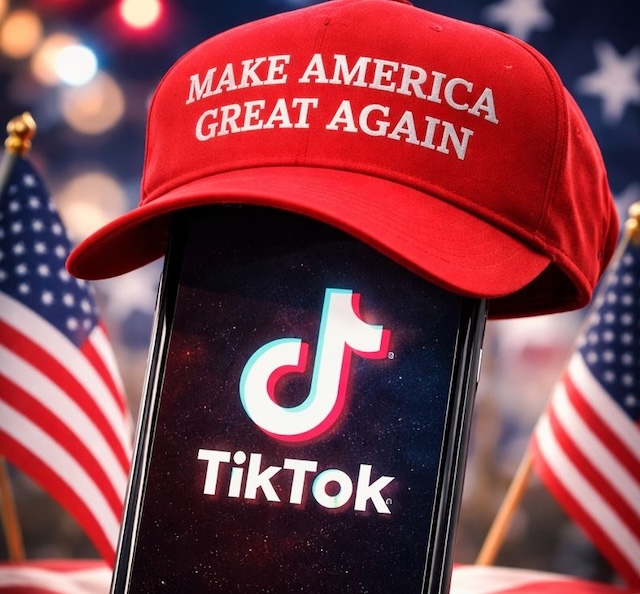
Years of dysfunction and uncertainty surrounding the future of popular social media app TikTok’s fate in the US culminated this week in a deal that places the company's US operations under the control of a US-based entity formed under the direction of President Donald Trump.

TikTok users received this message when attempting a search related to the late alleged child sex-trafficker Jeffrey Epstein
Less than several hours after the deal was inked the dysfunction and uncertainty seemed to return bigger than ever.
Users were plagued by the standard annoying app glitches: login errors, video upload problems, view and like counts that wouldn’t display.
Those were the least troubling concerns.

Alex Pretti was shot and killed by ICE over the weekend but attemepts to post videos about his death were unable to post on TikTok.
The latest iteration of TikTok is being slammed with widespread accusations of political censorship. On top of that, security experts are blasting the app for major privacy breaches.
In essence the new US-owners stand accused of the very concerns leveled at China in the first place.
TikTok’s US Timeline
In some ways, TikTok US’s tumultuous rollout was all too predictable. No part of this now-years-long saga has been smooth sailing.
From the moment TikTok arrived in the US —taking social media by storm — it’s been met with concerns over safety and national security based on its ownership by Chinese tech giant ByteDance.
In 2020, during his first term, President Trump signed an executive order declaring that TikTok would be banned in the US if its Chinese owners didn’t sell it. TikTok quickly sued and a federal judge sided with the company, blocking Trump. Shortly after taking office President Trump’s successor Joe Biden overturned the ban with an executive order of his own.
So TikTok’s opponents in the US went back to the drawing board, this time pursuing policy not by executive order but through legislation.
In 2024 the Protecting Americans from Foreign Adversary Controlled Applications Act (PAFACA) would pass both the US Senate and House with bipartisan support before being signed into law by President Biden.
The bill, which banned social networking services by a “foreign adversary controlled application” would require that TikTok be shut down in the US or sold to a US-owned company in under a year.
Only as the deadline drew nearer did many proponents of the bill's passage begin to fret over its ramifications and acknowledge the realities of banning what had become the most popular app in the country over concerns that had never come to fruition.
Democratic Senate Minority Leader Chuck Schumer, arguably responsible for the bill’s passage, became a vocal opponent of enforcing the ban, and instead sought to delay the deadline.
The entire TikTok debacle was also, simply put, bad politics. Neither party wanted to alienate the app’s overwhelmingly young user base, a voting demographic in high demand.
On January 18, 2025, two days before President Trump began his second term, TikTok stopped working in the US. The following day, every user received the following notification:
"Welcome back! Thanks for your patience and support. As a result of President Trump's efforts, TikTok is back in the U.S.!"
The message was of course met with mixed reactions, including many pointing out that Trump’s initial executive order had been the first step in seeking to ban TikTok.
Since returning to office, Trump has signed several executive orders giving TikTok an extension to change ownership.
That is until last week when a group of investors inked a deal to collectively control 80.1% of the company's US operations. TikTok’s owners include cloud software company Oracle, private equity group Silver Lake and UAE-based investment group MGX. ByteDance, the previous Chinese owners, still holds 19.9%.
Trump was personally involved in making the deal happen. Over the weekend, he posted on social media that TikTok “will now be owned by a group of Great American Patriots and Investors, the Biggest in the World.”
Of the new owners, perhaps the best known is Oracle's CEO Larry Ellison, a friend and vocal supporter of President Trump.
Privacy
When the newest iteration of the app went live on January 22, users were made to agree to terms of service agreement.
While we app users have all admittedly signed off on hundreds of such agreements, few of which it’s safe to assume we’ve actually read, TikTok’s is raising significant concerns.
In particular, a couple of points stand out like the app’s request to collect users’ “precise geolocation” tracking information. The previous iteration of the app did track location, but did so using IP-based approximations rather than GPS.
And then there’s the collection of sensitive personal information including “sexual life or sexual orientation, status as transgender or nonbinary, citizenship or immigration status” in the user agreement.
At a time when tensions surrounding the government’s views of immigrants, transgender individuals, and other marginalized communities are at an all-time high, the idea of handing over such personal information is concerning, particularly given the President’s personal involvement in the sale of the app.
Some, like media outlet TechCrunch, have pushed back against these concerns by arguing TikTok’s new data-sharing policies are no worse than its old policies or those of Meta, X, and ChatGPT.
Per outlet Tom’s guide, TikTok does, in fact, go further than other companies and previous iterations of itself. Meta, for example, makes no mention of “immigration status.”
Censorship
As the tragic news spread of this weekend's murder of Minneapolis resident Alex Pretti by ICE agents, swaths of TikTok users were unable to effectuate posts about the incident. In some cases, like that of singer Billie Eilish, videos would post but receive virtually no views.
Other attempts to post certain political messages on the app were met with similar issues. Per CBS, a TikTok search of “Epstein” drew zero results. Others posted images of a message displayed by TikTok which labeled a search for “Epstein” was a violation of "community guidelines.” “Epstien” has of course been used as of late in connection to deceased alleged child sex-trafficker Jeffrey Epstein and his ties to powerful figures including Donald Trump.
By Monday night California Governor Gavin Newsom announced that he would be opening an investigation into whether or not TikTok was intentionally censoring content that was critical of Trump and thus breaking the law.
The outcry over TikTok’s dysfunction and alleged censorship grew so loud that the company themself released “an update on our work to restore and stabilize TikTok.” The message blamed “a power outage at one of our data centers” and acknowledged issues with the app including slower load-times and display errors.
Many remain skeptical, pointing out that a mere power outage would not affect the censorship of certain content to this degree.
The Real Threat
There may very well have been legitimate concerns over national security under China’s ownership of TikTok in the United States.
China could have conceivably tracked our locations, used our personal data, and censored content that it disagreed with.
But in a flurry of fear-mongering, both political parties worked together to instead allow the current government to do those very things.
Americans all across the political spectrum should be deeply concerned over TikTok’s stifling and weaponization of a platform not to promote free speech but to advance the current administration's political agenda.
The President's political opponents should be particularly concerned. As the actions of federal ICE officers in Minnesota have made clear, many of the rights that we believed to be guaranteed are being treated as criminal offenses.
TikTok may be granting the Trump administration and its allies the tools to further restrict those rights and act punitively towards anyone attempting to use them.
Is that any better than the theoretical threat of a Chinese-owned TikTok?
© 2026 by Asian Media Group Inc.
At a time when tensions surrounding the government’s views of immigrants, transgender individuals, and other marginalized communities are at an all-time high, the idea of handing over such personal information is concerning, particularly given the President’s personal involvement in the sale of the app.
Recent Articles
- Qantas Bets on Sleep and Light Science to Sell 20-Hour Flights
- High-Wire Diplomacy Delivered US-Iran Deal but the Tricky Part's to Come
- Pentagon Asks for $80 Billion for Iran War Bills
- Ukrainian Drone Makers Zero in on Demand Created by Taiwan Tensions
- Bedtime Story: Tenali Raman and the Thieves
- Fujimori Edges Toward Peruvian Presidency as Sanchez Calls for Protests
- Republicans Blast Trump's Iran Agreement as Details Emerge
- SK Hynix Veteran Seok-Hee Lee Tapped to Lead Intel Foundry Packaging Push
- Mamdani Plans to Air World Cup for Free Throughout New York
- Myra Molloy Parlays Historic Broadway Success into a Leading Film Role