

Why the Extreme Delay in the Supreme Court's Tariff Decision?
By Tom Kagy | 09 Feb, 2026
Decisions on major cases with broad socioeconomic impact take longer as justices seek consensus to avoid a 5-4 split decision.
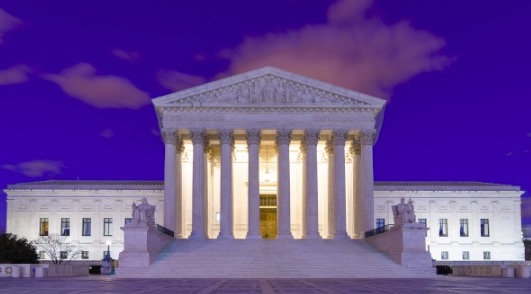
(Image from Supreme Court Website)
American businesses and consumers—as well as our trading partners—have been waiting nearly four months for the Supreme Court decision on cases challenging the legality and constitutionality of Trump's crippling bolt-from-the-blue tariffs.
Most of us expect those tariffs to be struck down as, on their face, they violate the Constitution's separation of powers that grant broad tariff authority to the Congress. That result would bring relief to the entire world, though of course, Trump has threatened to use his authority to impose more limited industry-specific tariffs to address "emergencies". What that emergency might be can only be answered by Trump. Perhaps the loss of centrality and clout for himself? Maybe the attendant loss of publicity as the world restores normally smooth trade efficiencies?
Be that as it may, it's helpful to understand what goes on in the Supreme Court when the justices are considering questions that could reshape the global economy and fracture the political vision of a President with an unrealistic perception of his and America's place in the global order.
When the Supreme Court hears consequential cases, they frequently languish in deliberation far longer than routine matters. The delay in rendering decisions on major tariff challenges currently before the Court fits squarely within this historical tradition. Let's take a look at the institutional dynamics of the Court and the internal machinations these cases present.
The Supreme Court has no deadline for issuing opinions once oral arguments conclude. The Court typically releases decisions for cases argued during a term before the term ends in late June or early July, but even this timeline is more custom than a hard deadline. When a case carries unusual weight, touching fundamental questions of constitutional law, economic policy, or political power, the justices often take longer to craft opinions and try to build the broadest possible coalition.
The main cause of delay in landmark cases is the pursuit of consensus. A 5-4 decision, while legally binding, carries less institutional authority than a broader majority. Split decisions signal to the public and to lower courts that the legal question remains deeply contested even among the nation's highest jurists. They invite more litigation, legislative responses, and potential revisiting of the issue when the Court composition changes. By contrast, a 6-3, 7-2, or even unanimous decision sends a powerful message of legal clarity and reduces the likelihood of challenges or defiance.
Building such consensus requires extensive negotiation among the various justices who preside over a team of highly credentialed law clerks within their individual chambers. After oral arguments, the justices meet in conference to take a preliminary vote and assign the majority opinion. As in the jury room of a trial, the initial alignment often proves fluid. A justice who voted tentatively with the majority might withdraw support upon reading the first draft of the opinion. Another might offer to switch votes if certain language is modified or if the reasoning follows a different analytical path. The justice writing the majority opinion must balance competing concerns, incorporate suggestions that broaden support, and sometimes substantially revise the opinion's scope or rationale.
This process becomes exponentially more complex in cases involving executive power and international commerce, as tariff cases inevitably do. These disputes raise fundamental questions about the separation of powers. How much authority has Congress delegated to the President in matters of trade? Do statutory grants of tariff authority contain adequate limits, or do they violate the nondelegation doctrine? Can courts effectively review presidential determinations that involve both economic and national security judgments? Each of these questions divides legal scholars and could divide the justices along lines that don't follow typical ideological patterns. In other words, the split on the tariff decision doesn' automatically follow the 6-3 split between conservatives and liberals in the current Court.
The justices understand that their decision will establish precedent affecting not just the specific tariffs at issue but the broader architecture of trade policy and executive authority for decades to come. A narrow ruling limited to the particular statutory language or factual circumstances might achieve consensus more easily but would provide less guidance for future cases. A sweeping decision that fundamentally redefines the limits of executive trade authority might better serve long-term clarity but could fracture the Court. The justices must weigh these competing considerations while drafting and redrafting their opinions.
There are interesting historical parallels. In United States v. Nixon, the Watergate tapes case decided in 1974, the Court took only 16 days from oral argument to decision, but that extraordinary speed came at the cost of a narrowly crafted opinion that avoided broader questions about executive privilege. Chief Justice Warren Burger worked intensively to achieve unanimity, recognizing that anything less would undermine the decision's political legitimacy at a moment of constitutional crisis. By contrast, in cases like Citizens United v. FEC, the Court took months and even scheduled reargument to address broader constitutional questions, ultimately producing a 5-4 decision that remains controversial.
The tariff cases present their own unique complications. International trade law intersects with administrative law, statutory interpretation, foreign relations, and constitutional limits on delegation. The economic stakes are enormous, affecting billions of dollars in commerce and the livelihoods of countless workers and businesses. The political dimensions are equally significant, touching presidential authority in an area where chief executives of both parties have claimed broad discretion for generations. A decision that substantially curtails this authority would reverberate through the executive branch and alter the balance of power between branches.
Moreover, the justices likely recognize that whatever they decide will face intense public scrutiny and criticism from at least some quarters. A decision upholding broad tariff authority might draw fire from free trade advocates and those concerned about unchecked executive power. A decision constraining that authority might face attacks from those who believe the president needs flexibility to respond to economic competition and national security threats. By taking additional time, the justices can more carefully craft language that explains their reasoning, addresses counterarguments, and demonstrates that they've fully considered the implications of their ruling.
The likely inclusion of concurring and dissenting opinions extends the timeline even more. Even when a majority coalesces around a particular outcome, individual justices may feel compelled write separately to articulate different reasoning, express reservations, or challenge the majority's approach. Each of these additional opinions requires time to write, circulate, and potentially trigger new rounds of responses from other chambers. The majority opinion author might need to revise in light of points raised in concurrences or dissents. This iterative process continues until no justice wishes to make further changes.
Behind the scenes, law clerks play crucial roles in this deliberation. They research precedents, draft opinion sections, and help identify potential weaknesses in legal arguments. When negotiations between chambers stall, clerks often serve as intermediaries, exploring whether specific textual changes might satisfy a justice's concerns. This work proceeds methodically rather than hastily, as the justices recognize that errors or oversights in major opinions can haunt the Court for years.
The Court is also aware that timing of the release of decision can have political implications. Releasing a tariff decision too close to an election might be seen as politically motivated. Releasing it during economic turbulence could amplify market reactions. The justices are supposed to decide based on law rather than political considerations but they are human, and context matters.
Ultimately, the justices recognize that rushing to judgment in such matters may create long-term problems of their own. A carefully reasoned decision that commands broad support from the Court, even if it takes months longer to produce, is seen as more durable and authoritative than a hasty ruling that barely commands a majority. When the decision finally arrives, its reasoning and breadth of support will hopefully reflect the time invested in deliberation and help stabilize the global economy from further disruptions like Trump tariffs.
Recent Articles
- Chinese Foreign Minister Kicks off Meeting with Iranian Counterpart
- KOSPI Breaks 7,000 As Samsung Joins $1 Trillion Club
- China Services Growth Sped Up in April
- Trump Cites Deal Progress in Pausing Hormuz Ship Escorts
- Vox Momenti: Whereas I Love You, ...
- AI Is Writing Your Next Favorite Video Game
- Job Openings Fell in March but Hiring and Layoffs Surged
- Musk Wanted $80 Billion to Colonize Mars Testifies OpenAI President
- Nasdaq Hits Record on Surging AI Chip Stocks
- Anthropic's Deep Push into Finance Tasks Likely to Disrupt Software Sector