

Deadly MD Ship Fiasco Isn't Helping Us Beat the Unfair Bad-Driver Stereotype
By J. J. Ghosh | 13 May, 2026
A Singaporean company and an Indian national have been charged with 18 federal counts in the collapse of Baltimore's Francis Scott Key Bridge. As an Asian American, I have some thoughts.
There’s a common joke in the Muslim American community about how anytime there’s a terrorist attack in the US, they immediately pray that it was carried out by a white guy and not one of them.
Pretty much every demographic has their own version of this: fear of a known stereotype against them being exacerbated.
I imagine that Irish Americans roll their eyes whenever one of their own is involved in a bar fight.
Just like how white people know they aren’t beating the allegations anytime a contestant with their complexion gets kicked off of Master Chef for not using enough spice.
Which brings me to the well-known stereotype that we Asian Americans are, unfairly, not celebrated for our driving skills.
So when I read the news this week, I saw a piece that may very well have set our community back quite some time.
The Incident
I’ll start with some facts and a note that while there may ultimately be some humor in this story, it begins with utter tragedy.
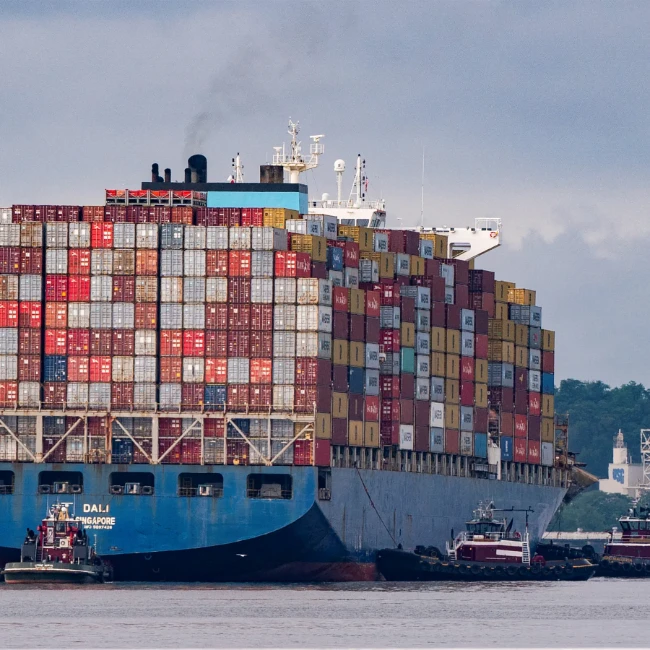
On March 26, 2024 at approximately 1:30 in the morning, a massive container ship called the Dali was navigating out of Baltimore Harbor, bound for Sri Lanka. The ship lost power. Twice. And then it drove directly into a support pier of the Francis Scott Key Bridge.
The disastrous crash caused six fatalities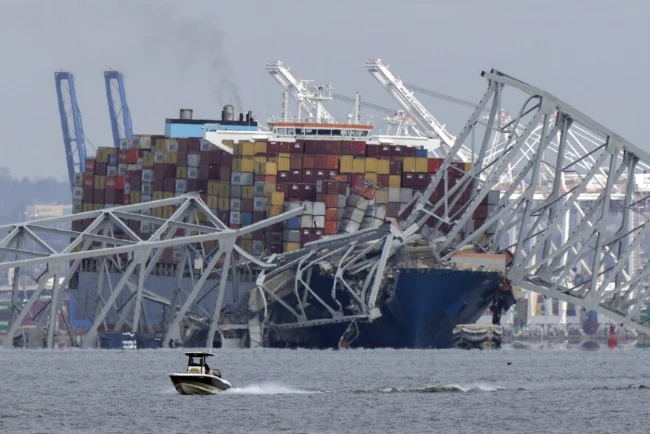
The bridge collapsed in seconds.
Six construction workers were on the bridge at the time, filling potholes. They never had a chance. Most of them were Latino immigrants doing the kind of overnight infrastructure work that keeps a city functioning while everyone else sleeps.
The silver lining is that, thanks to the quick actions of Maryland’s transportation authorities, the bridge was shut down just before the ship struck, preventing far more casualties.
The collapse also effectively halted shipping traffic through the Port of Baltimore for weeks, disrupting supply chains and inflicting enormous economic damage on the surrounding region. The bridge rebuild is expected to cost approximately $5 billion, and is not projected to open until 2030 at the earliest.
It was one of the most devastating infrastructure disasters in modern American history. The Dali itself was eventually repaired and returned to service. Several members of its crew were not so fortunate — they remained marooned in the Baltimore area for two years as part of an agreement between the federal government and the ship’s operator while investigations proceeded.
For two years, the question of who bore legal responsibility for all of this hung in the air.
This week, we got an answer. And I’m not going to lie to you: the answer was not ideal for those of us who are sensitive about our reputation behind the wheel.
The Culprits
The indictment names Synergy Marine Pte Ltd., based in Singapore, and Synergy Maritime Pte Ltd., based in Chennai, India.
Radhakrishnan Karthik Nair, 47, an Indian national who served as technical superintendent for the Dali container ship, was also charged. Together, they face 18 counts, including conspiracy, failure to report hazardous conditions, misconduct or neglect of ship officers resulting in death, obstruction, false statements, and violations of the Clean Water Act.
The FBI’s special agent in charge for the Baltimore Field Office put it plainly: “The collapse should never have happened. Those who were responsible for the ship’s operation deliberately cut corners at the expense of safety.” Specifically, prosecutors allege the company improperly altered flushing pumps on the Dali to supply fuel to two of the ship’s generators, causing repeated blackouts that the company knew about and failed to disclose to the Coast Guard.
Synergy is not going quietly. “DOJ is criminalising a tragic accident,” the company said, adding that the allegations are “inconsistent with the clear and well-documented findings of the specialist maritime professionals involved in the NTSB investigation.” The attorney for Nair added: “Once again, the government is trying to turn a tragic accident into a crime. Karthik thinks about this accident every day, but he certainly did not cause it.”
A civil trial involving billions of dollars in damages is scheduled for this summer. The criminal trial will follow.
The Driving Thing
Right. So.
I want to raise something at this particular moment, which is that the “Asians are bad drivers” stereotype is, by every available metric, empirically false.
Asian Americans have the lowest traffic fatality rate of any racial group in the United States — roughly four deaths per 100,000 people. White, Hispanic, and Black drivers all come in at around 12 per 100,000.
Asian Americans are, statistically, at least three times safer behind the wheel than any other demographic. An Australian study found that Asian-born drivers had about half the risk of an accident as their Australian-born peers. Asian Americans also pay lower auto insurance premiums on average — the market’s coldly actuarial way of saying: these people do not crash their cars.
We are not bad drivers. The data is unambiguous. We are, in fact, among the safest drivers in America.
And I want to be clear about something: a container ship is not a car. It weighs 100,000 tons, requires approximately three miles to stop, and is operated by a multinational corporation with shareholders, regulatory bodies, and Coast Guard oversight.
But since we’re apparently expanding the portfolio, let’s take stock of where things stand across other modes of transportation.
Planes: only 2.5% of airline pilots in the United States are of Asian American or Pacific Islander descent. We are dramatically underrepresented at the controls of commercial aircraft. And those who do fly have an excellent record — I think.
Aviation safety data doesn’t actually break down accident rates by pilot ethnicity, which means there’s no statistical basis for concern — and in the absence of data, I choose optimism.
Trains: Asia operates the most punctual and efficient high-speed rail networks on earth, which feels relevant and yet somehow never comes up in these conversations. Japan’s Shinkansen has carried over 10 billion passengers since 1964 with zero passenger fatalities. Zero. This is the same continent that is allegedly bad at operating vehicles.
Ships: well. We’re working on it.
There was enough suffering as a result of this incident. Let’s not add our reputations to the list.
We are, in fact, among the safest drivers in America. And I want to be clear about something: a container ship is not a car. It weighs 100,000 tons, requires approximately three miles to stop, and is operated by a multinational corporation with shareholders, regulatory bodies, and Coast Guard oversight.
Recent Articles
- EV Startup Xpeng in Talks to Buy Volkswagen's European Factory
- Ford Stock Surges on Investor Optimism over New Energy Storage Business
- Microsoft Shopping for AI Startups for Life After OpenAI
- Cisco to Cut About 4,000 Jobs in AI-Focused Restructuring as Big Orders Surge
- Lu Jianwang Found Guilty of Operating Secret Police Station on China's Behalf
- Deadly MD Ship Fiasco Isn't Helping Us Beat the Unfair Bad-Driver Stereotype
- The First Symptom of an Onrushing Future of Optional Work is MAGA
- Republicans Won Redistricting War but Likely to Lose House in Midterms
- SoftBank Q1 Profit More Than Triples to $12 Billion on OpenAI Stake Gains
- China-Phobic US Chip Equipment Bill Reviled by Beijing