

Danone-Chobani Yoghurt Protein War Underscores GLP-1 Impact
By Reuters | 20 Jun, 2026
French dairy giant Danone sued US rival Chobani accusing it of inflating protein claims as yoghurt remains one of few food groups seeing a boost from users of GLP-1 weight-loss drugs.
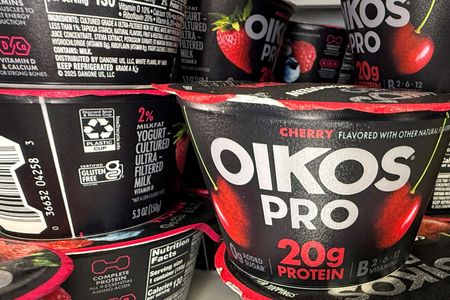
FILE PHOTO: Danone Oikos Pro, protein-packed yogurt, for sale in a cooler at a grocery store in Port Washington, New York, U.S., May 4, 2026. REUTERS/Shannon Stapleton/File Photo
Danone's lawsuit against Chobani over protein claims makes it clear the French dairy company sees its U.S. rival as a threat in one of the few food groups seeing a boost from weight-loss drug users both during and after they get their GLP-1 fix: yoghurt.
Danone, which has struggled to meet growing consumer demand for high-protein products, sued Chobani in Manhattan federal court on Monday, accusing it of inflating protein claims on labels on multiple-serving tubs of Chobani 20G Protein, which it calls a direct rival to Danone's Oikos Pro in the ultra-high-protein yogurt category.
The battle for protein supremacy is particularly important in the United States, where growing numbers of GLP-1 weight-loss drug users are seeking out protein-heavy products to combat muscle wastage. A consumer study by Boston Consulting Group showed that unlike products such as protein shakes, yoghurt is among a handful of foods that see a more permanent boost from weight-loss drugs.
"High-protein foods like yoghurt or...meat seem to increase in frequency during and even more after stopping GLP-1s," Lauren Taylor, managing director and senior partner at BCG, said.
The Paris-based company accused Chobani of copying its product and misleading consumers to improve sales, allegations Chobani dismissed. Danone also said Chobani's methods were allowing it to undercut Danone's €1 billion Oikos brand on price.
Chobani CEO Hamdi Ulukaya said Danone was "throwing things out there" to create damaging headlines for the privately held New York company, which he founded in 2007.
"In a way, I am kind of laughing at it," Ulukaya told Reuters. "We never add external protein to our products. We will never mislead anybody."
Danone, in a statement, said it believes consumers should be able to make product comparisons with "clear, accurate and consistent nutrition information." It said Chobani's multi-serve labelling inflates its serving size, which it believes is misleading to consumers, rendering them unable to make "an accurate comparison between products."
DANONE FACING DOWN AGGRESSIVE COMPETITORS
Danone, which highlighted its struggles to meet extremely high demand for high-protein yoghurts in the second half of 2025, is steadily adding more production capacity. But Barclays analysts said in May that investors are getting nervous for what they see as a lack of urgency around the recovery of Danone's U.S. dairy business.
The company's shares are down 15% this year, compared with an 11% rise in the MSCI World Index.
"Competitors, notably Chobani, (are) doing a much better job and growing currently at more than 20%," Barclays said. "There is a feeling that Danone has been too slow to add capacity and perhaps it needs to spend more to compete with aggressive competitors such as Chobani."
According to NielsenIQ data shared by Chobani, the company’s U.S. market share was 26% in the first quarter of this year, up from 21% three years ago. Danone’s share slipped to 25.8% from 30.7% in the same timeframe.
Danone's dairy unit saw 3% like-for-like sales growth in the Americas in the first quarter of this year, filings show.
The company has sued Chobani at least four times since 2016, most recently over coffee packaging slogans; Ulukaya said previous lawsuits have been thrown out.
"Danone sues Chobani four or five times a year for everything," said Brad Charron, a former Chobani marketing executive who now runs plant-based protein brand ALOHA. "If you can't compete with them, sue them."
Charron did say a lot of big consumer packaged foods companies will change serving sizes to represent things -- like protein content -- differently. However, he said "at the end of the day, I think the consumer is smart enough to figure out whether they're being misled one way or the other."
(Reporting by Alexander Marrow; editing by David Gaffen)
© 2026 by Asian Media Group Inc.
Recent Articles
- Danone-Chobani Yoghurt Protein War Underscores GLP-1 Impact
- Italy's Meloni Tells Trump to Focus on His Own Popularity as Row Continues
- Trump Unveils Gifted Qatari 747 As Addition to Air Force One Fleet
- A Warm World Cup Welcome Endears the US to Fans
- China's May Refined Oil Exports Rose from April, Australia Received Agreed Volume
- New Bangladesh Premier to Seek Investments, Jobs in China, Malaysia
- Charles Schwab Working with Cboe to Enter Prediction Market
- Mexico's Love Affair with All Things Korean — Until Thursday's Kickoff
- The Making of a Striking Tiger
- Japan's World Cup Prospects Brighter Than Their Single Group Point Might Suggest