

GoldSea Votes 2026: The Very Curious Asian Race to Replace Nancy Pelosi
By Romen Basu Borsellino | 22 May, 2026
The race for California's 11th Congressional District pits a South Asian American man against an East Asian American woman

We recently looked at Alaska — a red state where 39,950 largely ignored AAPI voters could tip a Senate race that nobody expected to be competitive. The case there required some explaining.
This week requires none.
California’s 11th Congressional District — Nancy Pelosi’s seat — is 30.6% Asian American. The district covers most of San Francisco, a city where Asian Americans make up 37.2% of the total population and have been the second-largest demographic group for decades. Chinese Americans are the largest Asian subgroup in the San Francisco metro area, comprising 41% of the AAPI population.
And this year, for the first time in nearly 40 years, the seat is open.
Nancy Pelosi announced her retirement last November, ending a congressional tenure that began in 1987. As Mission Local’s Joe Eskenazi put it: “Nobody still in the business has run a real San Francisco congressional race. There hasn’t been a serious and competitive race for two generations.”
There is one now. And two of the three leading candidates are Asian American.
The Candidates
Speaker Emeritus Nancy Pelosi has held the seat for nearly 40 years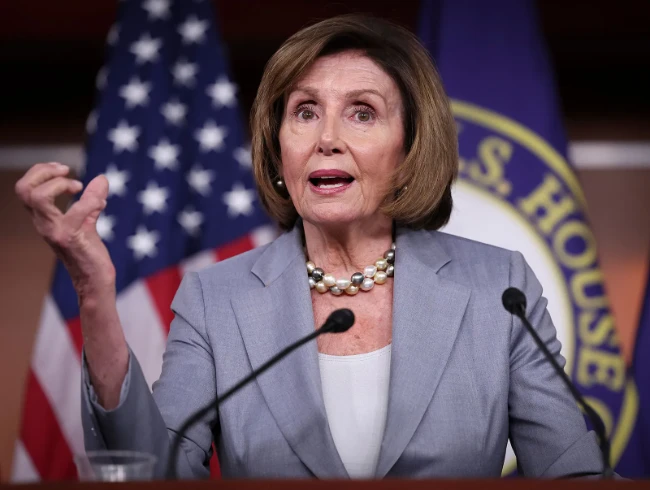
Eleven candidates are on the June 2 ballot, with three Democrats leading in fundraising, endorsements, and media attention: State Senator Scott Wiener, San Francisco Supervisor Connie Chan, and tech entrepreneur Saikat Chakrabarti.
California uses a top-two primary system, meaning all candidates appear on the same ballot regardless of party, and the two highest vote-getters — again, regardless of party — advance to the November general election. In a district that Pelosi won 81% to 19% in 2024, the practical effect is that the Democratic primary is the race. Whoever finishes in the top two on June 2 almost certainly goes to Washington. Which means the fight between Wiener, Chan, and Chakrabarti is the only fight that matters.
Wiener is the frontrunner, leading by double digits in recent polls. He is openly gay, an 18-year veteran of San Francisco politics, and has built his career championing housing production and LGBTQ rights. The California Democratic Party endorsed him, and the tech donor class has backed him heavily. He’s raised $3.5 million, virtually all of it from individual donors. He is the establishment candidate in a race that also features two very different visions of what AAPI political power looks like in 2026.
Connie Chan was born in Hong Kong and immigrated to the United States as a teenager. She has represented San Francisco’s Richmond District — home to one of the largest Chinese American communities in the country — on the Board of Supervisors. Her campaign is rooted in bread-and-butter issues: housing, healthcare, immigrant rights, and budget stewardship. She has won endorsements from the California Teachers Association, National Nurses United, the San Francisco Labor Council, and the Harvey Milk LGBT Democratic Club. She had raised only $459,000 going into the final stretch — a fraction of her competitors — but then, just this week, came the endorsement that changes everything.
Nancy Pelosi has endorsed Connie Chan.
The announcement came two weeks before Election Day and was described as a surprise — Pelosi had signaled she would stay neutral, though she had been spotted at Chan fundraisers. It was also a public rebuke of Wiener, who has called Pelosi his hero. Pelosi’s formidable fundraising network is now Chan’s to access, and her organizational muscle in the final stretch could push Chan into second place.
That leaves Saikat Chakrabarti.
Chakrabarti was born in Fort Worth, Texas, to Bengali immigrant parents — his father was born in Dhaka before the Partition and fled to Kolkata as a child. He graduated from Harvard, became the second engineer at Stripe, accumulated significant wealth, and then walked away from tech entirely to co-found Justice Democrats, the organization that recruited and ran Alexandria Ocasio-Cortez’s insurgent 2018 campaign. He later served as her chief of staff.
His campaign is explicitly anti-establishment: wealth taxes, a Green New Deal, a complete reimagining of the Democratic Party’s brand and strategy. He has spent nearly $5 million — most of it self-funded — on TV ads designed to rapidly build name recognition against two long-serving local elected officials.
Here’s the backstory that makes Pelosi’s endorsement of Chan feel less like a surprise and more like a reckoning: Chakrabarti launched his campaign in early 2025 specifically to challenge Pelosi — before she had announced her retirement. He was running against her directly, calling for new party leadership and arguing she no longer had the strength for the current political moment. Pelosi announced her retirement months later.
When asked why he hadn’t told Ocasio-Cortez he was running before the news broke, Chakrabarti explained he didn’t want to put her in an awkward position given that he was challenging Pelosi. That explanation may have come too late: according to CNN, Ocasio-Cortez was not pleased to learn about his campaign from media reports rather than from him directly.
Which brings us to one of the more curious subplots in this race: AOC has not endorsed Chakrabarti. For the man who managed her historic 2018 campaign, who served as her chief of staff, and who has modeled his entire political identity on the insurgent template she helped pioneer — the silence from her office is loud.
Asked by a reporter why she wasn’t backing him, Ocasio-Cortez spoke broadly about her approach to primaries and never mentioned his name. A spokesperson did not respond to multiple requests for comment. Whether the rift is personal, strategic, or both, the absence of her endorsement has denied Chakrabarti the most powerful progressive validator available to him in this race.
South Asian v East Asian ?
This is not a race where AAPI voters are the supporting cast — a community to be courted, a demographic to be won, a footnote in someone else’s coalition math. This is a race where two AAPI candidates are competing for one of the most historically significant congressional seats in America, and the community itself is the decisive battleground.
Chan’s political base is the Chinese American community of the Richmond District — organized, electorally experienced, and historically the most politically powerful AAPI bloc in San Francisco. Her candidacy is in many ways a crystallization of what Chinese American political power in this city has been building toward for decades.
She is the local candidate, the community-rooted candidate, the candidate who has represented her neighbors on the Board of Supervisors and now wants to take that work to Washington.
Chakrabarti’s candidacy is something different. His South Asian American background — son of partition refugees, immigrant family story, Harvard-educated tech worker who left wealth for politics — resonates with a specific AAPI experience: the immigrant achiever who uses that achievement to challenge systems rather than join them. He has explicitly compared himself to Zohran Mamdani, whose New York mayoral victory he cited as proof that “organised people beat organised money if you stand for real change.”
Will the AAPI community vote with its own?
It's a fair question — and in a race this close, possibly the decisive one. San Francisco's Chinese American community is one of the most organized AAPI voting blocs in the country. The Richmond District, which Chan has represented for years, is its political center of gravity. If Chinese American voters turn out for Chan the way Irish Catholic voters once turned out for their own in this city, Pelosi's endorsement becomes the accelerant on an already-burning fire.
The South Asian calculus is harder to read. Chakrabarti is not a community-rooted candidate the way Chan is — he spent much of his adult life outside San Francisco and built his political identity through national progressive organizing rather than neighborhood relationships. His Bengali American background may resonate culturally with South Asian voters, but his appeal is ultimately ideological rather than ethnic.
What's clear is that Chan's campaign is banking on the Chinese American vote as her floor. The American Prospect noted that she "believes her focus on bread-and-butter issues and support among the city's large Asian American population can pay off" — a direct acknowledgment that the Chinese American community is the base she needs to reach second place behind Wiener. Pelosi's endorsement is specifically a play for the organizational muscle that community can provide in a final sprint.
Whether AAPI voters coalesce around their own candidates, split between them, or get absorbed into Wiener's broader coalition is the open question that June 2 will answer.
Beyond San Francisco
It would be easy to treat this race as a San Francisco story — a hyperlocal contest over housing policy and progressive ideology in one of America’s most politically idiosyncratic cities.
Sure, it’s that. But it’s also more.
The AAPI population in California grew 25% between 2010 and 2020 — the largest percentage increase of any major racial or ethnic group in the state — with the fastest growth in the San Francisco Bay Area. That growth has not been matched by proportional political representation. The race to replace Pelosi is the most visible test yet of whether the most AAPI-dense major city in America will elect an AAPI representative to the most prominent AAPI-plurality district in the country.
For our series, the question is simple: in a race this close, where two of the three leading candidates are Asian American, where the district is nearly a third AAPI, and where Pelosi’s last political act was to endorse a Chinese American woman — what does the AAPI vote do?
The primary is June 2. For the first time in two generations, the answer is truly up in the air.
© 2026 by Asian Media Group Inc.
Recent Articles
- Intel Turns to Next-Gen ASML Tool to Help Make Its Laptop Chips
- Cambodian Gaming Tycoon Was Landlord to Chinese Scam Compound
- China New Home Price Slide Slows, but Recovery Doubtful
- Iran Threatens to Block More Vital Seaways as Trump Orders Renewed Iran Blockade
- ASML Beats Q2 Revenue Estimates on AI Chip Demand
- Nvidia Has Begun Shipping H200 AI Chips to China
- IBM Warns AI Boom Is Squeezing Software Budgets; Sending Shares Down
- Two Utah National Monuments Fall to Trump Anti-Green Drive
- 72% of Americans Disagree with Trump on Refugees
- June CPI Not As Hot As Feared, Soothing Markets