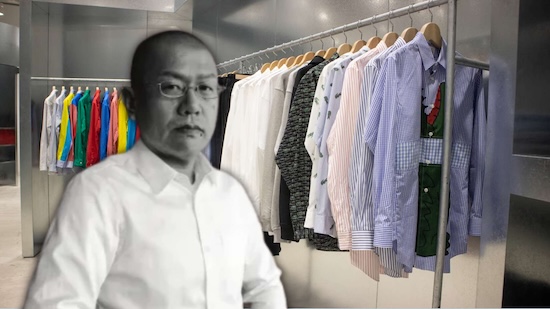

One of Fashion’s Most Influential Designers Rarely Shows His Face
By Kelli Luu | 28 Jun, 2026
Junya Watanabe has always made an effort to stay out of the spotlight, but his designs made it impossible for the fashion world to ignore him.
© 2026 by Asian Media Group Inc.
There are many luxury designers looking to build their brand through fame and publicity, then there’s Junya Watanabe, a designer who wanted to stay entirely out of the spotlight to let the clothes speak for him.
He was born in Fukushima, Japan in 1961 and grew up with an interest in clothing because his mother ran a made-to-order clothing shop. This exposed him to fashion design and tailoring at a very young age, leading him to attend Bunka Fashion College, one of Japan’s most influential fashion schools. Watanabe graduated in 1984 and immediately began working for Comme des Garçons as a pattern maker under fashion legend Rei Kawakubo.
Kawakubo was impressed by Watanabe’s skill and creative approach and named him chief designer of Comme des Garçons’ Tricot knitwear line in 1987. This opportunity allowed Watanabe to debut his first collection in Tokyo in 1992 and was on the runway at Paris Fashion Week in 1993.
Fashion critics quickly noticed his work and described his style as “techno couture” because of his futuristic designs. Watanabe expanded his influence even more through major collaborations with brands like Levi’s, Converse, and The North Face, which have all helped normalize modern luxury streetwear.
Even with his global influence, Watanabe always wanted to remain private. He rarely gives interviews, almost never appears in public, and doesn’t even give a customary bow at the end of his shows, yet still has earned massive respect in the fashion industry. Today Watanabe still works for Comme des Garçons out of the brand’s headquarters in Tokyo.
Junya Watanabe built his brand through innovation and risky experimentation and even though he rarely speaks in public, his work quietly helped shape modern fashion, from avant-garde runway pieces to collaboration-driven streetwear culture.
Recent Articles
- Supreme Court Rejects Trump Bid to Restrict Birthright Citizenship
- Ralph Lauren Soars in China As Superfans Embrace the American Dream
- Meituan Says New Trillion-Parameter AI Model Trained on Chinese Chips
- Samsung, SK Hynix Mega Chips Complexes Go Long on AI Optimism
- US Working on Ban Targeting Chinese Energy Inverters
- Ferrari and BMW Join Tesla, China in Switch from Copper to Cheaper Aluminum
- World Cup Is a Seismic Event in Soccer Stronghold California
- Strong Dollar Pushes Yen to 40-Year Low as Traders Test Japanese Authorities
- Canada's GDP Rebounded in April with 0.5% Monthly Growth
- Joby, Toyota Announce Joint Venture for Air Taxi Production