

Trump Endorsee Loses in Georgia Governor's Primary Race
By Reuters | 17 Jun, 2026
Voters chose businessman Rick Jackson over Lieutenant Governor Burt Jones, who was endorsed by Trump and Governor Brian Kemp.
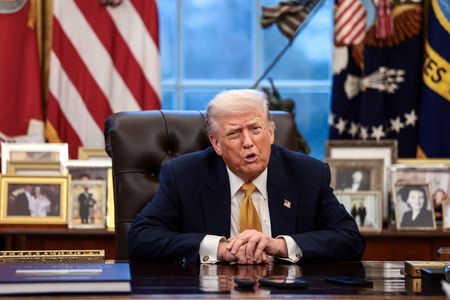
U.S. President Donald Trump is interviewed by Reuters White House correspondent Steve Holland (not pictured) during an exclusive interview in the Oval Office in the White House in Washington, D.C., U.S., January 14, 2026. REUTERS/Evelyn Hockstein/File Photo
Georgia Republicans rejected President Donald Trump's pick for governor on Tuesday, handing him his most embarrassing primary defeat in this election cycle.
Voters selected businessman Rick Jackson over Lieutenant Governor Burt Jones, who was endorsed by Trump and Governor Brian Kemp. Jackson was leading by 5 percentage points when the race was called by U.S. media.
The loss follows the June 2 defeat of Trump-endorsed U.S. Representative Randy Feenstra, who narrowly lost the Iowa gubernatorial primary to businessman and farmer Zach Lahn.
Jackson's upset was a highlight in a busy night of primaries and runoffs on Tuesday. Here’s what went down:
TRUMP'S MIXED NIGHT IN GEORGIA
While Trump's pick in the governor's race lost, his preference for the U.S. Senate in Georgia, U.S. Representative Mike Collins, defeated former football coach Derek Dooley by double digits.
Collins, whom Trump endorsed last week and dubbed "MAGA Mike" on Truth Social, will face Senator Jon Ossoff, a rising Democratic star and potential 2028 presidential candidate, in November's general election.
The balance of the Senate is at stake. Georgia and Michigan are the only states that Trump won that Senate Democrats are defending in November's midterm elections. Democrats would need to net four seats to win control of the chamber.
Collins faces a fundraising juggernaut in Ossoff, who has raised $60 million for his campaign and entered May with $33 million in the bank. By contrast, Collins finished May with $1.2 million. The Republican Senate Leadership Fund has pledged to invest $44 million into flipping the seat.
"Now it's time to get to work, defeat Jon Ossoff and take this seat back for the people of this state," Collins wrote on X.
Jackson, a healthcare executive, spent more than $100 million despite only launching his campaign in February. He branded himself a conservative outsider and emphasized his improbable rise from poverty and foster care to becoming a billionaire after dropping out of college. U.S. Senators Ted Cruz of Texas and Rick Scott of Florida endorsed Jackson in the lead-up to the runoff.
Jackson will run against Democrat Keisha Lance Bottoms, a former Atlanta mayor and adviser to ex-President Joe Biden.
While Jackson is able to self-fund his campaign, analysts say he could have a tough road ahead to win in November.
"This is not going to be a particularly good year to be a Republican in this state," said Charles Bullock, a political science professor at the University of Georgia. "Democrats could win the governorship."
TRUMP'S CLOUT IN THE SOUTH
In Alabama, Trump-endorsed U.S. Representative Barry Moore defeated former Navy SEAL Jared Hudson in Tuesday's runoff.
Moore led by 16 percentage points with 82% of the vote counted.
He is heavily favored to be elected to the Senate in November. Trump won Alabama by more than 30 percentage points in 2024.
DEMOCRATIC SOCIALIST LEADS IN DC
D.C. Councilmember and democratic socialist Janeese Lewis George has a sizeable lead in the race for the Democratic nomination for mayor of Washington, D.C., but U.S. media outlets have not projected a winner.
It's the first time the District has used a ranked-choice voting system, which allows voters to select up to five candidates, and officials said it could be days before winners are known in key races.
If she goes on to win the primary, Lewis George is expected to become mayor of the heavily Democratic district and will join New York Mayor Zohran Mamdani as the second democratic socialist to lead a major U.S. city. A third, Nithya Raman, has advanced to the runoff in November for mayor of Los Angeles, taking on incumbent Democrat Karen Bass.
Last week, Trump said he "wouldn't like it" if Lewis George was elected mayor and threatened to "take back Washington and run it on the federal basis" if she wins.
D.C. Councilmember Robert White was elected non-voting delegate to the U.S. House of Representatives, replacing 89-year-old Eleanor Holmes Norton who has held the seat since 1990.
MINIMUM WAGE INCREASE DEFEATED
Oklahoma voters rejected a ballot measure that would have raised the state's $7.25 minimum wage to $15 by 2029. Republican Governor Kevin Stitt and more than 100 Republican state legislators opposed the increase, with lawmakers saying its passage would lead to "severe" economic fallout, such as job losses and rising prices.
The "no" vote prevailed with 55% of the vote.
But not all Oklahoma Republicans agreed: Republican Labor Commissioner Leslie Osborn supported the ballot measure, telling a local news outlet everyday costs have risen while Oklahoma's minimum wage hasn't changed since 2009.
"You absolutely cannot pay the gas to get to a job, have an apartment and live extremely frugally. You're going to have to rely on government programs," she said. "As a Republican, we should want people ... to stand on their own two feet."
(Reporting by Nolan D. McCaskill; Editing by Cynthia Osterman, Michael Learmonth, Thomas Derpinghaus and Ros Russell)
© 2026 by Asian Media Group Inc.
Recent Articles
- Trump Scraps Four More Offshore Wind Leases with $765 Million Refund
- Oil Roundtrips, AI Booms, US Consumers Spend, Economists' Fed Outlooks Go Wild
- Trump Endorsee Loses in Georgia Governor's Primary Race
- BMW Shares Sink After Profit Warning Highlights China and Iran Risk
- AI Will Lead to Labour Shortages, Bezos Says at Paris Conference
- Viet, Chinese Men Among Doubling of Deaths at ICE Detention Centers Under Trump
- Carbon Removal Funding Backed by Big Tech Increases by $1 Billion
- US Retail Sales Beat Expectations in May But Expected to Slow
- Allbirds Rebrands as Smartbird in AI Pivot, Hires Former AWS Executive as CEO
- Trump Administration Pivots to Buying Stakes in Critical Sectors