

Viet, Chinese Men Among Doubling of Deaths at ICE Detention Centers Under Trump
By Reuters | 17 Jun, 2026
A Vietnamese man with cardiovascular problems died in the “Speedway Slammer,” the repurposed Indiana maximum-security prison that’s become a symbol of the Trump administration’s immigration crackdown, while in Pennsylvania a Chinese man who had previously attempted suicide was found hanging in the shower.
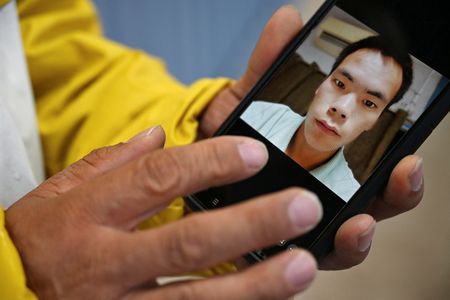
Yanfeng Ge shows a picture of his brother, Chaofeng Ge, who was found dead in ICE custody in 2025, in Dickens, Texas, U.S. May 26, 2026. REUTERS/Annie Rice
A Vietnamese man with cardiovascular problems collapsed and died in the “Speedway Slammer,” the repurposed Indiana maximum-security prison that’s become a symbol of the Trump administration’s immigration crackdown. In a Pennsylvania detention center, a Chinese man who had previously attempted suicide was found hanging in the shower. In a New York facility, a Honduran man with an elevated heart rate and tremors from alcohol withdrawal died in his cell with no emergency care.
These men are among 50 people who have died in U.S. immigration detention since President Donald Trump launched his mass deportation campaign in January 2025, Immigration and Customs Enforcement records show.
Between 2009 and 2024, U.S. immigration facilities had one death annually for every 3,848 detainees, based on the facilities’ average daily population, a Reuters analysis of ICE data found. That rate has more than doubled since Trump returned to office, reaching about one death for every 1,630 people based on preliminary data through early June.
The data analyzed by Reuters was obtained by the Deportation Data Project through a public records request and processed by the Vera Institute of Justice, a nonprofit organization that advocates for lower incarceration rates.
The causes of detainee deaths can be complex and do not necessarily stem from neglect or abuse by detention-center administrators. But three experts in detention deaths who reviewed ICE records and autopsies for Reuters said the rising rate and other data points raised concerns about the quality of supervision and medical care in detention centers that have seen their populations balloon under Trump.
The population rose in the last year of Democrat Joe Biden's administration, which stepped up enforcement amid election-year criticism. ICE held about 40,000 immigrants when Trump took office, up from a Biden-era low of about 14,000 in February 2021 during the COVID-19 pandemic.
Under Trump, the number shot up to about 70,000 at its January peak, during a major crackdown in Minneapolis, before falling back to about 57,000 as of early June.
Twenty-one of the 50 deaths were discovered after the detainee was deceased or unresponsive, ICE records show. These cases, which included 10 suicides, are especially concerning, because they could reflect a lack of physical- and mental-health oversight and timely care, said Sanjay Basu, an associate physician at the University of California, San Francisco, who has studied ICE detention deaths, one of the three experts who reviewed the data and records for Reuters.
Heart attacks and cardiovascular issues accounted for 16 deaths, which the medical experts said suggested potential problems with initial health screenings and chronic-disease management.
Chanelle Diaz, an assistant professor of medicine at the Columbia University Irving Medical Center, said the data and records show the agency is choosing to imprison medically vulnerable people, resulting in a “spike in preventable deaths.”
“The system is not designed for chronic-care management,” Diaz said, noting that at least two detainees who died had dementia and posed no risk to the public.
The Department of Homeland Security did not provide detailed records of the Trump-era deaths reviewed by Reuters. The agency said that it was committed to ensuring a “safe, secure and humane” environment in detention.
“Comprehensive medical care is provided from the moment individuals arrive and throughout the entirety of their stay,” DHS spokesperson Lauren Bis said in a statement to Reuters.
QUESTIONS ABOUT TIMELY MEDICAL CARE
Part of the difficulty in determining the factors driving the death rate stems from the scant detail in the Trump administration detention-death reports reviewed by Reuters and the three experts.
The administration’s reports contain less detail on the circumstances surrounding each death than previously. Many omitted critical information such as the detainee’s medical history, medications, and emergency-response details, the experts said.
Michele Heisler, medical director at nonprofit Physicians for Human Rights, singled out the ICE death report on Santos Reyes Banegas, a Honduran man who died in the Nassau County Correctional Center on Long Island, New York, last September.
ICE said in the report that during intake at 11:22 a.m. on September 17, 2025, a nurse noted symptoms of alcohol withdrawal. Two hours later, a doctor who evaluated him said he was experiencing tremors and prescribed medications for withdrawal.
The report, however, doesn’t specify any particular medicine or confirm the medicines were administered. At 6:25 a.m. the following day, Reyes was found unresponsive in his cell and was declared dead 20 minutes later, the ICE report said.
Heisler said timely care in a hospital setting can greatly reduce life-threatening risks from withdrawal. “It raises the question of why wasn't he immediately sent to an emergency department,” she said.
DHS said the death remains under investigation but “the preliminary cause appears to be liver failure complicated by alcoholism.”
An investigation by the New York State attorney general's office found that the officer on duty did not cause Reyes' death, a spokesperson for the office said.
SCREAMING FOR HELP; WAITING 15 MINUTES
Tuan Van Bui, a 55-year-old Vietnamese man, arrived on November 19 at the so-called Speedway Slammer, the Trump administration’s nickname for the Miami Correctional Facility in Bunker Hill, Indiana.
Bui, who suffered a stroke in late 2023, had been prescribed medication for high blood pressure and cholesterol last August, soon after he was detained, an ICE report said.
In February, Bui filed a federal court petition in Indiana seeking his release, saying he walked with a cane and detention was causing “his health to worsen.”
On the first day of his second term, Trump rescinded Biden-era guidance instructing ICE to consider mitigating factors before detaining immigrants, including their age, health, role as a family provider or military or public service.
In March, a physician diagnosed Bui with chronic obstructive pulmonary disease, an ICE report said, without providing further details.
A week later, on April 1, Bui collapsed.
Fellow detainees screamed at a nearby guard for help, three detainees told Reuters.
Iraqi detainee Ibrahim Ibrahim started performing CPR, using skills he learned as a translator during the Iraq War, he said in a phone interview.
It took about 15 minutes for a guard to arrive, Ibrahim and the other two detainees said. Medical staff arrived 10 minutes after that.
It was too late. Ibrahim felt no pulse.
“By the time medical came, he was dead,” Ibrahim said.
Federal immigration detention standards call for a four-minute medical-emergency response time. When asked by Reuters, Bis, the DHS spokesperson, did not provide a specific response time in Bui’s case but said staff “immediately initiated” life-saving measures and “immediately contacted emergency services personnel, who swiftly responded.”
The Indiana Department of Correction, which manages the facility, referred questions to ICE.
The ICE report on Bui’s death said that detention center staff initiated CPR, started defibrillation, and called emergency medical services before a supervising physician declared Bui dead around 6 p.m. The report did not mention Ibrahim providing CPR first.
The local coroner attributed Bui’s death to natural causes related to cardiovascular disease.
Ly Wang, Bui's stepdaughter, said his family had been preparing for the possibility that he would be sent to Vietnam.
"The worst case scenario for us was that he was going to get deported," she said, "not that he was going to die."
PATIENT SHOULD BE MONITORED FOR SUICIDE RISK
Early morning on August 5 at the Moshannon Valley Processing Center in Pennsylvania, staff discovered the body of Chinese immigrant Chaofeng Ge hanging in a shower stall.
Ge, 32, had been transferred to the center less than a week earlier after spending seven months incarcerated pending trial on charges of fraud involving $154.62 in gift cards, court records show.
Ge crossed the U.S. border with Mexico illegally in 2023, according to ICE. He had been working as a New York City delivery driver, his brother Yanfeng Ge said through a translator.
Records from the Dauphin County Prison in Harrisburg, Pennsylvania, where Ge was held on fraud charges, show he attempted suicide by hanging on January 25 last year. A summary from the University of Pittsburgh Medical Center, where he was given emergency care after the attempt, noted: "Patient should be monitored for suicidal ideation/plan.”
Two days later, a social worker at the prison reported that Ge showed signs of depression and bipolar disorder in a suicide-risk assessment. A psychiatrist assessed Ge at the prison and prescribed an antipsychotic drug and later an antidepressant.
Tom Weber, CEO ofPrimeCare Medical, which provided medical services at Dauphin County Prison, said the facility had supplied the records to ICE when Ge was transferred to its custody. Reuters could not independently confirm the records were delivered.
ICE said in a press release on Ge’s death that he arrived without medical records from his previous incarceration. The agency said in its death report that when Ge arrived at the Moshannon Valley immigration detention center, a nurse performing an intake interview through an interpreter recorded that he had no past medical or mental health conditions or current prescriptions and put him in the general population.
The central Pennsylvania pathologist who performed the autopsy on Ge also noted a history of psychiatric problems in his report.
The GEO Group, a private company contracted to run the Moshannon center, directed questions to ICE.
SPEAKING ILL OF THE DEAD
Mohammad Paktiawal was detained by ICE on March 13 in a Dallas suburb while taking five of his six children to school. That same day, Paktiawal, 41, was transferred to hospital for shortness of breath and chest pain, according to the ICE death report.
The next morning at breakfast, hospital staff noticed his tongue was swollen and gave him an allergy medication. They began life-saving actions three minutes later before pronouncing him dead, according to the ICE death record.
The experts in detention deaths consulted by Reuters found nothing in ICE records released so far to suggest the agency's emergency response was lacking.
Three months later, however, his family still awaits answers from ICE and the Dallas County medical examiner on the cause of death, said his brother, Naseer Paktiawal.
A former Afghan special forces soldier, Paktiawal had been evacuated with his family by the U.S. military during the Taliban takeover in 2021 and had applied for asylum, Naseer said. He was the sole family provider and worked at a local Afghan market, he said.
In September, Paktiawal was indicted for improper use of $200 or more in federal food stamps for business purposes, a felony. Two months later, he was arrested for attempted theft of about $220 worth of groceries, records show, and released.
Before Trump’s second term, Paktiawal’s background would have made him a lower priority for detention. But the Laken Riley Act, enacted shortly after Trump took office, required ICE to detain anyone arrested for shoplifting and other crimes.
In a press release confirming Paktiawal’s death on March 15, ICE focused on the criminal charges, a trend under the Trump administration.
It read: “Criminal illegal alien from Afghanistan with previous arrests for fraud and theft passes away at Texas hospital.”
(Reporting by Ted Hesson in Washington, Kristina Cooke in San Francisco and Maria Tsvetkova in New York; Additional reporting by P.J. Huffstutter in Hammond, Indiana, and Ben Kellerman in New York; Editing by Craig Timberg and Suzanne Goldenberg)
© 2026 by Asian Media Group Inc.
Recent Articles
- Trump Scraps Four More Offshore Wind Leases with $765 Million Refund
- Oil Roundtrips, AI Booms, US Consumers Spend, Economists' Fed Outlooks Go Wild
- Trump Endorsee Loses in Georgia Governor's Primary Race
- BMW Shares Sink After Profit Warning Highlights China and Iran Risk
- AI Will Lead to Labour Shortages, Bezos Says at Paris Conference
- Viet, Chinese Men Among Doubling of Deaths at ICE Detention Centers Under Trump
- Carbon Removal Funding Backed by Big Tech Increases by $1 Billion
- US Retail Sales Beat Expectations in May But Expected to Slow
- Allbirds Rebrands as Smartbird in AI Pivot, Hires Former AWS Executive as CEO
- Trump Administration Pivots to Buying Stakes in Critical Sectors